

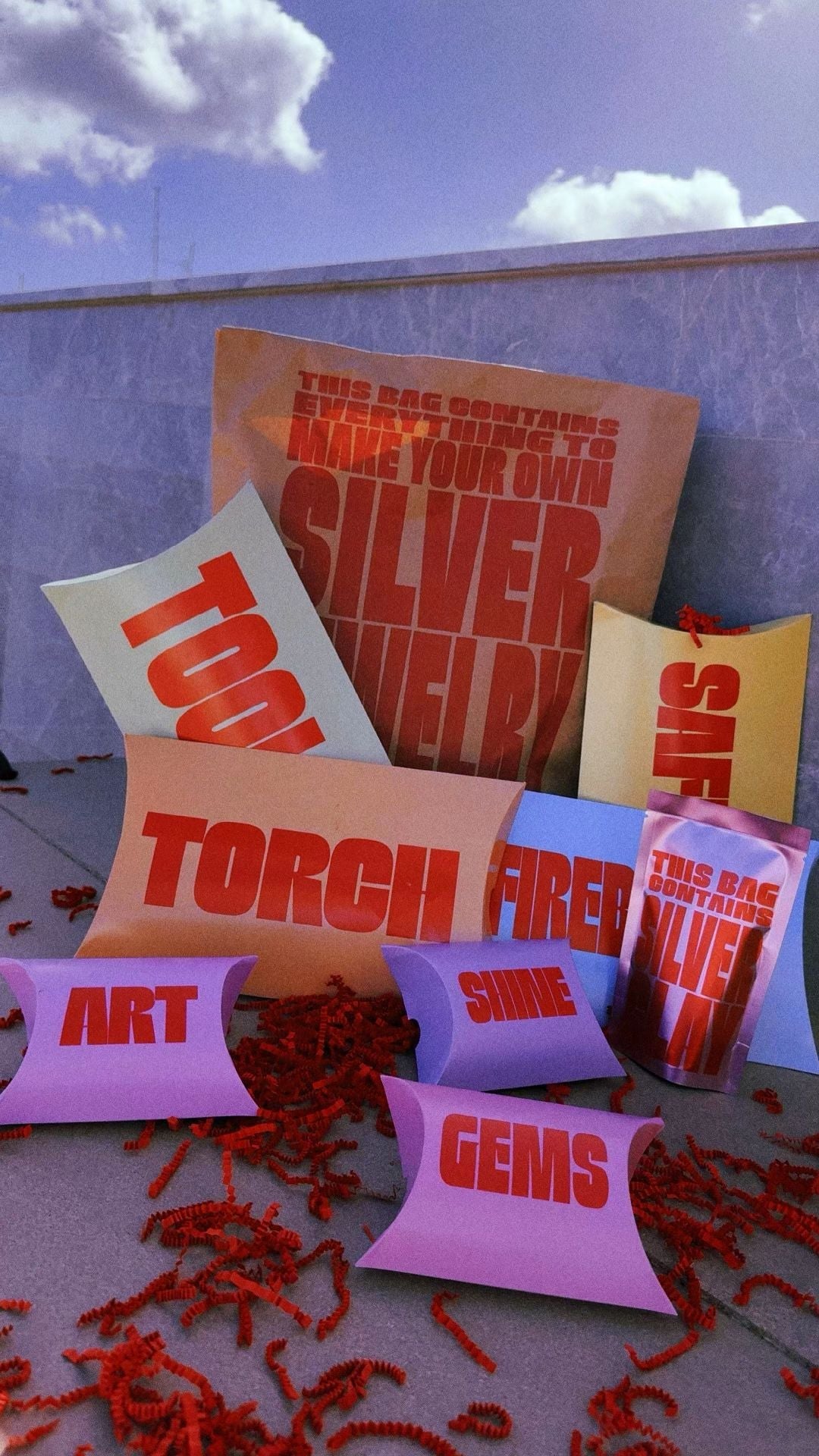
Silver clay is a soft, moldable material made of microscopic particles of pure silver, an organic binder, and water. You shape it just like ordinary clay, then fire it with a torch or kiln. The binder burns away and what remains is a solid piece of 99.9% fine silver. So yes, after firing, silver clay is real silver.
If you have seen someone shape a lump of grey clay, heat it, and pull out a gleaming silver ring, you have seen silver clay in action. That is why it is often called the clay that turns into silver. It is one of the most beginner-friendly ways to make real silver jewelry at home, and it does not require a metalworking studio.
This guide puts the whole picture in one place: what the material is, what happens inside it when you fire it, what you need to fire it with, what you can realistically make, and how to get started.
Is silver clay real silver?
Yes. This is the question everyone asks first. Before firing, the clay is about 90% silver by weight, mixed with a binder and water that make it soft and workable. During firing, the binder burns off and the silver particles fuse together in a process called sintering. What is left is 99.9% fine silver, the same purity as a fine silver bullion coin and purer than sterling silver, which is 92.5%. It is not plated and not an imitation: your finished piece can be assayed, hallmarked, polished and worn exactly like any other fine silver jewelry.
How does silver clay work?
Silver clay relies on a simple bit of materials science:
- Shape it. While it is soft, you sculpt, roll, carve, stamp, or press the clay into a mold. You have roughly 15 to 30 minutes of comfortable working time.
- Dry it. The water evaporates and the piece becomes firm and chalky. This stage is called greenware, and you can still sand, carve and drill it.
- Fire it. Heat from a torch or kiln burns away the binder and fuses the silver particles into solid metal. The piece shrinks slightly as it densifies.
- Polish it. Once cooled, you brush and polish it to a mirror shine, or leave it brushed, matte, or oxidized for a darker, antique look.
The three states of the material
Silver clay passes through three distinct stages, and each one behaves differently.
- Wet. Straight from the packet it is pliable and slightly tacky. This is when you roll, cut, texture and shape. It also dries out quickly in open air, so most of the work happens under a light cover or with slightly damp fingers.
- Dry. Once the water has left, the piece becomes chalky and brittle — the stage usually called greenware. It is fragile, but this is the easiest moment to refine it: sanding, filing and tidying edges is far simpler now than after firing.
- Fired. After heat, it is metal. Everything from here is metalwork: brushing, polishing, shaping a band on a mandrel.
What happens when you apply heat
Two things happen, in order.
First, the organic binder burns off. Under a torch you will usually see a brief flame and a little smoke as it goes; the piece darkens for a moment, then turns white.
Second — and this is the part that matters — the silver particles sinter. Held at temperature, they fuse at their points of contact and grow together into a continuous solid. Nothing melts. The piece keeps the shape you gave it while its internal structure changes from loose powder to solid metal. What is left is 99.9% fine silver.
Why the finished piece comes out smaller
Because the binder made up part of the volume and is now gone, the particles pack closer together and the piece shrinks by roughly 8–10%. This is not a defect; it is the mechanism working correctly.
It does mean planning ahead. A ring shaped to fit exactly will come out too small, so bands are built oversized to allow for it. Our guide to making a silver clay ring covers how much to allow, and silver clay shrinkage goes through it in more detail.
What sintering needs to succeed
Three conditions matter more than anything else:
- The piece must be bone dry. Trapped moisture turns to steam and can crack or blister a piece as it heats.
- Heat must be even. Keep the flame moving rather than holding it in one spot.
- Temperature must be held long enough. Reaching the right glow briefly is not the same as sintering; the particles need time to fuse.
An under-fired piece looks finished but is weak — it may bend oddly or break under light pressure. When that happens, the usual cause is time, not technique.
From packet to finished piece: what the process looks like
The full walkthrough lives in how to use silver clay, step by step, but here is the shape of an afternoon so you know what you are taking on.
Set up before you open the packet. The clay starts drying the moment it meets air, so lay out your work surface, roller, thickness guides, shaping tools and a small bowl of water first, and lightly oil your hands and tools. Seal whatever clay you are not using straight away.
Shape it. You have roughly 15 to 30 minutes of comfortable working time. For a flat piece, around 1.5 mm thick is a sensible target — thickness guides, or a couple of playing cards either side of the clay, keep it even. A drop of water blends a seam or repairs a small crack instantly. Err on the thick side; thin pieces stay fragile once fired. Textures such as leaves, lace or stamps give beginners the most reliable results.
Dry it completely. Two to three hours in open air, or 15 to 20 minutes with a hairdryer on low heat. Dried clay looks paler and feels chalky. Hold it against your lip: if it still feels cool, there is moisture inside. This is the stage for sanding edges, carving detail and drilling a hole for a jump ring — whatever you leave rough here will be rough in silver.
Fire it. Sit the piece on a firebrick and bring it to a soft orange glow with a butane torch, then hold that glow for two to three minutes while the particles fuse.
Polish it. Straight off the torch the piece is matte white. A steel or brass brush brings up the silver; polishing papers take it to a mirror finish, or an oxidised patina darkens the recesses for contrast. Then add a jump ring, cord or ear wire.
Do you need a kiln to fire silver clay?
No, not for small pieces. A handheld butane torch reaches the temperature needed to fire rings, charms, and pendants. A kiln gives you more control and is better for larger pieces or batches, but it is not required to get started. This is why torch-fired silver clay is so popular with hobbyists: you can make real silver jewelry without expensive equipment. More detail: kiln or torch for silver clay.
Fine silver clay vs sterling silver clay
Fired silver clay like ours is fine silver (999): 99.9% pure. Sterling silver (925) is 92.5% silver alloyed with copper for extra hardness. Fine silver is slightly softer, tarnishes more slowly and has a warmer, whiter colour. Sterling silver clays exist too, but most need a kiln. For rings you wear every day, simply make the band a little thicker. Sterling vs fine silver clay compared.
What can you make with silver clay?
Silver clay is ideal for small, detailed pieces:
- Rings and signet rings
- Charms and pendants
- Earrings
- Personalized keepsakes, including imprinted fingerprints, handwriting, or textures
- Talismans and one-of-a-kind gifts
You can also set gemstones. Lab-grown stones like cubic zirconia can be fired directly into the clay, so the stone is locked in as the metal forms. For inspiration, see 10 silver clay project ideas.
A sensible first project
Most people get the best first result from a simple textured pendant or a small charm: one flat shape, one texture, one hole for a jump ring. There is little to go wrong, the piece dries quickly because it is thin and even, and it fires in a couple of minutes. Rings are the natural second project rather than the first — a band has to be sized with shrinkage in mind, joined cleanly and dried without distorting, which is a lot to get right at once.
Whatever you choose, keep the first piece small. A small piece uses less clay, dries sooner and fires more evenly, so you learn what the material does before you commit a larger amount of silver to a design.
Silver clay vs. precious metal clay (PMC) vs. art clay
These names all refer to the same family of material: fine silver in clay form. Precious Metal Clay (PMC) and Art Clay Silver are two long-running brand names, while silver clay and metal clay are the generic terms. They behave very similarly; the differences come down to brand, firing schedules, and how each one handles. If you are just starting out, what matters most is a reliable clay and clear instructions, not the brand on the package. Comparing brands? Read silver clay vs PMC.
What usually goes wrong, and why
Once you know the mechanism, most silver clay problems explain themselves.
- Cracks while shaping mean the clay is drying too fast. Work under a light cover and keep water within reach.
- Cracks or blisters after firing almost always mean the piece was not fully dry when it went under the flame.
- A piece that will not take a polish is usually under-fired rather than badly finished.
- A band that bends under light pressure has not been held at temperature long enough to sinter properly.
- A ring that comes out too tight is shrinkage doing exactly what it should. Build the band oversized next time.
How do you get started with silver clay?
The easiest way to start is with everything in one place. A good starter kit includes the clay, a torch for firing, basic shaping and finishing tools, a few stones, and step-by-step instructions, so you can make your first piece without sourcing parts separately.
At TheLilaLobster, we make our own silver clay and put together a complete Silver Clay Starter Kit designed for beginners: 10 g of 99.9% fine silver clay, a torch, a ring mandrel, tools, safety items, polishing materials, cubic zirconia stones, and a QR code with beginner tutorials. If you already have your tools and just need clay, buy our fine silver clay in 5, 7, 10 and 20 g packs, or compare everything on our silver clay page.
Frequently asked questions
Is silver clay expensive? It costs more per gram than craft clay because it is real silver, but a small amount goes a long way: 5 g makes a small pendant and 7 g a simple ring. What silver clay really costs per project.
Is it safe to use at home? Yes, with basic precautions: fire in a safe, heat-proof area, use protective eyewear, and follow the instructions.
How long does it take to make a piece? Shaping takes minutes, drying takes a little while, and firing takes just a few minutes with a torch. You can realistically make your first piece in an afternoon.
Does silver clay tarnish? Like all silver, it can tarnish over time, but a quick polish restores the shine. Fine silver tarnishes more slowly than sterling silver.
What is greenware? It is the name for a piece that has dried but not yet been fired. It is chalky and fragile at that point, and it is the easiest stage at which to sand, carve and drill.
Does the finished piece shrink? Yes, by roughly 8–10% as the particles pack together during firing. Ring bands are built oversized to allow for it.
Ready to make your first piece? Explore the Silver Clay Starter Kit, everything you need in one box.