
Steel clay is the least talked-about member of the metal clay family, and it usually comes up when someone has already tried silver and wants to know how far the idea stretches. The concept is the same one that makes silver clay work: fine metal powder held in a binder that you shape by hand, then fire away so only metal is left. The difference is what that metal turns out to be, and how much effort it takes to get there.
What steel clay is
Steel clay contains finely powdered steel rather than precious metal. You roll it, texture it and cut it much like any other clay, let it dry, then fire it. What comes out is a steel object: hard, dark-toned and considerably tougher than silver.
That toughness is the appeal. Makers who want something structural, industrial-looking or simply hard-wearing are drawn to steel in a way they never would be to a soft precious metal. It takes a different kind of finish too: less bright shine, more of a gunmetal character.
How steel clay is fired
This is where steel clay parts company with silver clay, and it is the part worth knowing before you buy any. Base metal clays such as steel, bronze, copper and brass generally cannot be torch-fired in open air. Oxygen is the problem: at firing temperature the metal will oxidise instead of sintering properly.
The standard approach is a kiln, with the pieces buried in a container of activated carbon so the carbon consumes the available oxygen. Firing schedules are longer, results are more sensitive to how the pieces are packed, and there is more trial and error involved. Always follow the schedule the specific brand publishes, because these vary.
Steel clay vs silver clay
Put side by side, the two suit different people. Steel clay is cheaper per gram, much harder once fired, and demands kiln equipment plus patience. Silver clay costs more up front but fires to 99.9% fine silver with a torch, shrinks by roughly 8-10%, and gives a bright, finished result the same day you make it.
If your goal is a wearable piece you can hold at the end of an evening, silver clay gets you there with far less kit. If your goal is a robust component and you already own a kiln, steel is an interesting material to experiment with.
Who steel clay actually suits
Realistically, steel clay is a second or third material rather than a first one. The people who get good results with it have usually already learned the fundamentals, such as how thick to roll, how to dry without cracking, and how to sand and finish, on something more forgiving. Learning the handling and the firing chemistry at the same time is a lot to take on.
It is also worth being honest about availability: steel clay is a niche product with far fewer brands, tutorials and troubleshooting threads behind it than silver. When something goes wrong, there is less to fall back on.
Where to start instead
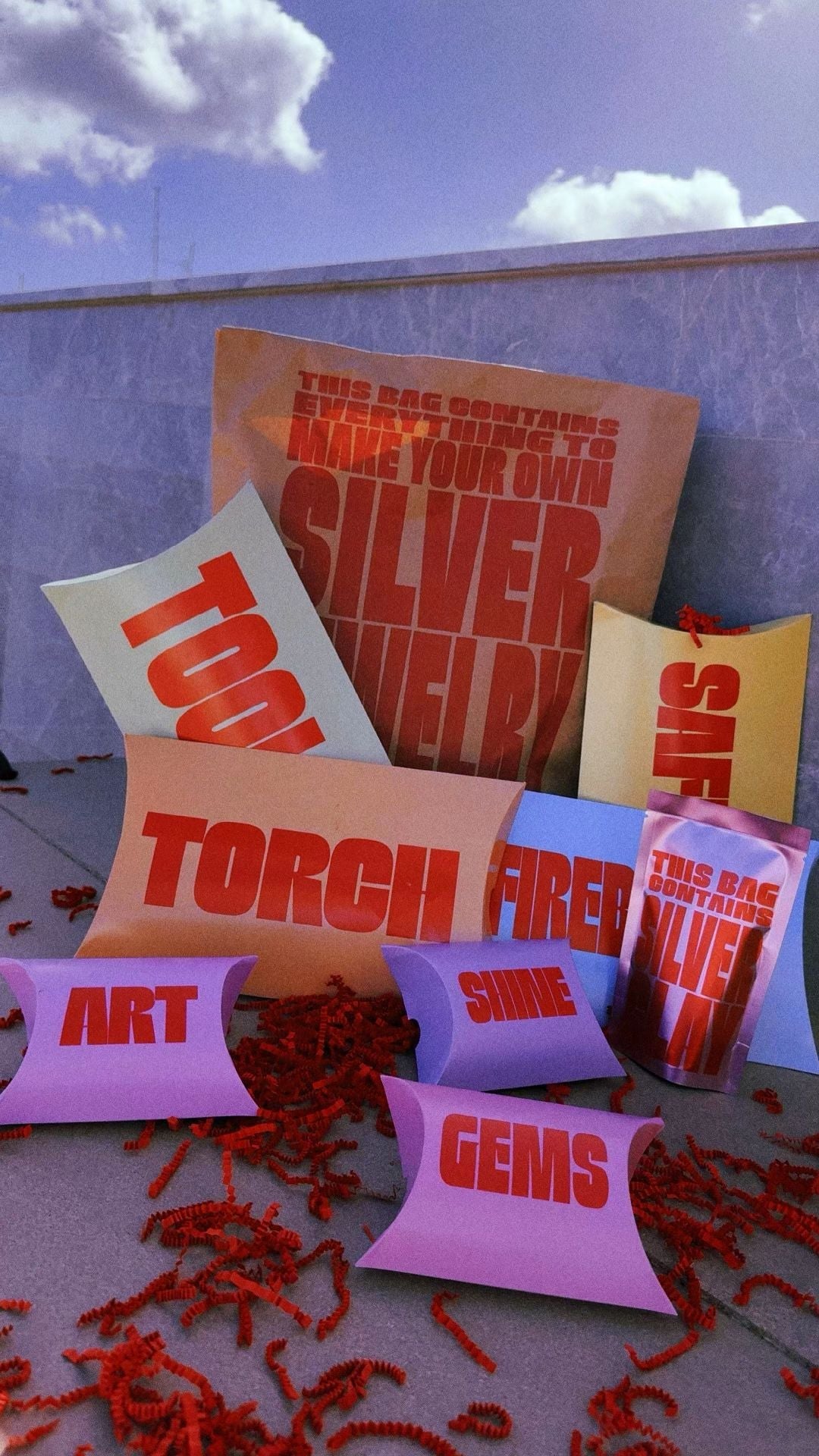
If steel clay caught your eye because you like the idea of clay that turns into metal, silver clay is the friendlier doorway into it. Our silver clay starter kit includes the clay, a torch, tools, a cubic zirconia and instructions, so nothing extra is needed to make and fire a piece at home, and we ship worldwide with duties covered.
Once the handling feels natural, moving to a kiln-fired base metal like steel becomes a much smaller step. If you want the groundwork first, how to use silver clay walks through shaping, drying, firing and finishing in order.