

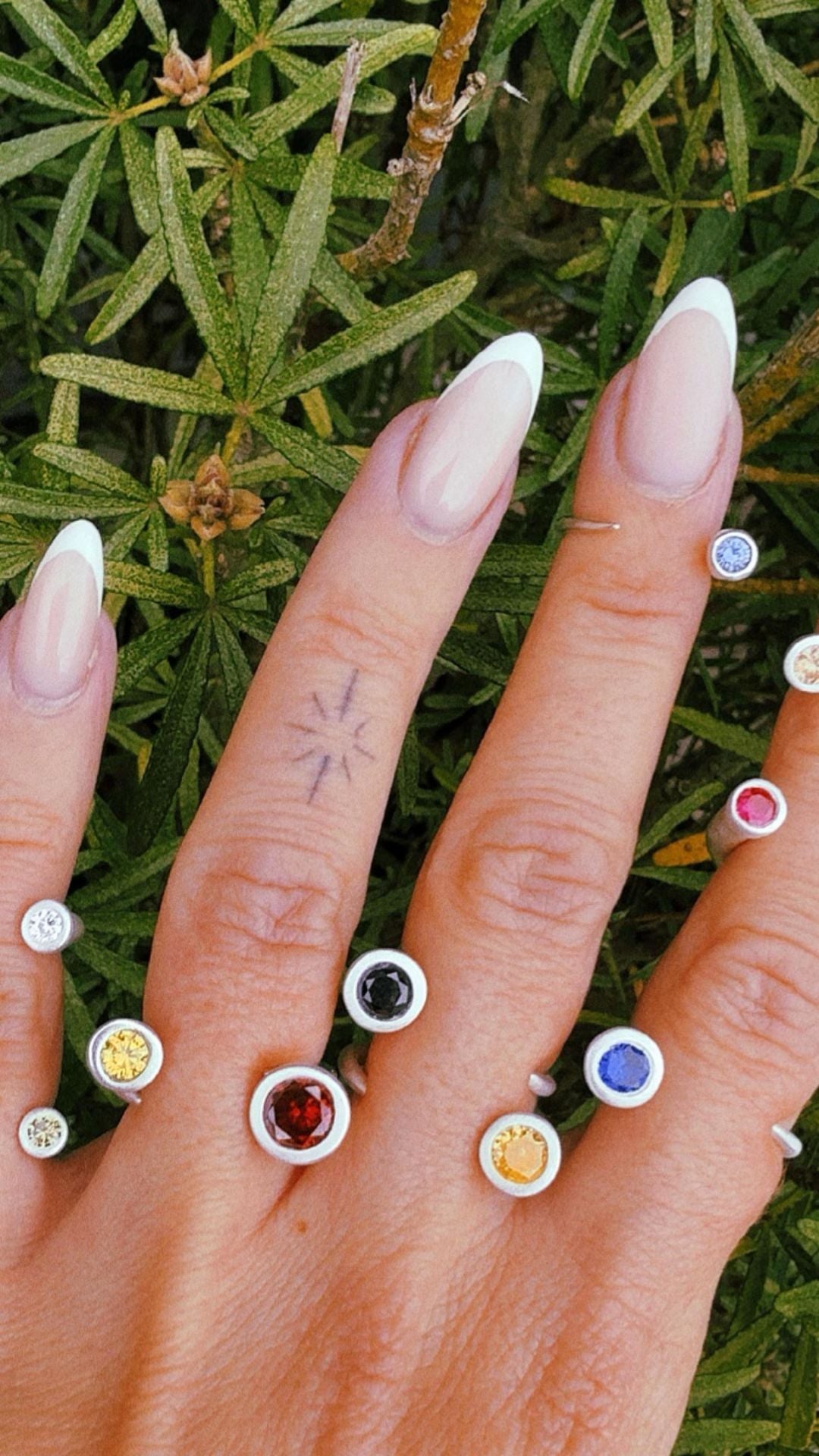
Stainless steel vs sterling silver is one of those comparisons that sounds technical but comes down to something simple: one is a hard-wearing industrial alloy, the other is a precious metal. Both make perfectly good jewellery. They just behave differently on your skin, in your jewellery box and on a workbench. Here is what actually separates them.
What each metal is made of
Sterling silver is 92.5% pure silver mixed with 7.5% of another metal, usually copper. That is what the 925 stamp means. The copper is there for strength, because pure silver on its own is soft.
Stainless steel is an alloy of iron, chromium and usually nickel. The chromium is the clever part: it forms a thin invisible layer on the surface that stops the iron beneath from rusting. There is no precious metal in it at all.
Worth knowing as a third option: fine silver is 99.9% pure silver with no copper. It is what silver clay becomes once it has been fired, and it is the reason handmade clay pieces behave a little differently from shop-bought sterling.
Tarnish, scratches and everyday wear
This is the honest trade-off. Stainless steel does not tarnish and shrugs off scratches. Sterling silver will darken over time, because the copper in it reacts with sulphur in the air. It is not damage, and a polishing cloth takes it straight back off, but it is a small piece of upkeep.
Sterling is also softer, so it picks up fine scratches with wear. Plenty of people like that, since it settles into a soft lived-in surface rather than staying showroom-shiny. If you want a ring you never think about, steel wins. If you want something that ages, silver wins.
Skin sensitivity
Most stainless steel used in jewellery contains nickel. It is usually locked into the alloy tightly enough not to bother anyone, but if you react to nickel it is worth checking the grade before you buy. Sterling silver contains copper rather than nickel, and fine silver contains essentially nothing but silver, which is why it suits sensitive ears so well.
Value and repairability
Sterling silver has a metal value and steel effectively does not. More usefully for anyone who wears their jewellery hard: a silver ring can be resized, soldered and reshaped by a jeweller. Stainless steel is difficult to work with once it has been made, so a steel ring that no longer fits is usually a replacement rather than a repair.
Which one can you actually make at home?
Here the comparison stops being close. Stainless steel needs heavy machinery, industrial welding and equipment you are not going to have in a kitchen. Silver, on the other hand, is genuinely approachable.
Silver clay is fine silver particles held in an organic binder. You shape it with your hands like modelling clay, let it dry, then fire it with a small torch. The binder burns away and what is left is 99.9% fine silver. Pieces shrink by roughly 8-10% as they fire, which is simply something you allow for when you size a ring.
If that sounds like something you would like to try, the silver clay starter kit has the clay, the torch, the tools, cubic zirconia stones and instructions in one box, and we ship worldwide with duties covered. Our complete guide to silver clay walks through the whole process, and if you would rather start with something specific, making a silver clay ring is a good first project.
Stainless steel vs sterling silver: which should you choose?
Choose stainless steel for jewellery that lives a rough life with no maintenance: a daily chain, a gym ring, something that will be knocked about. Choose sterling or fine silver when you want a precious metal that can be repaired, engraved, resized and passed on, and when you do not mind the occasional polish.
And if what you really want is a piece nobody else owns, that decision more or less makes itself. Silver is the one you can make yourself at your own kitchen table.