

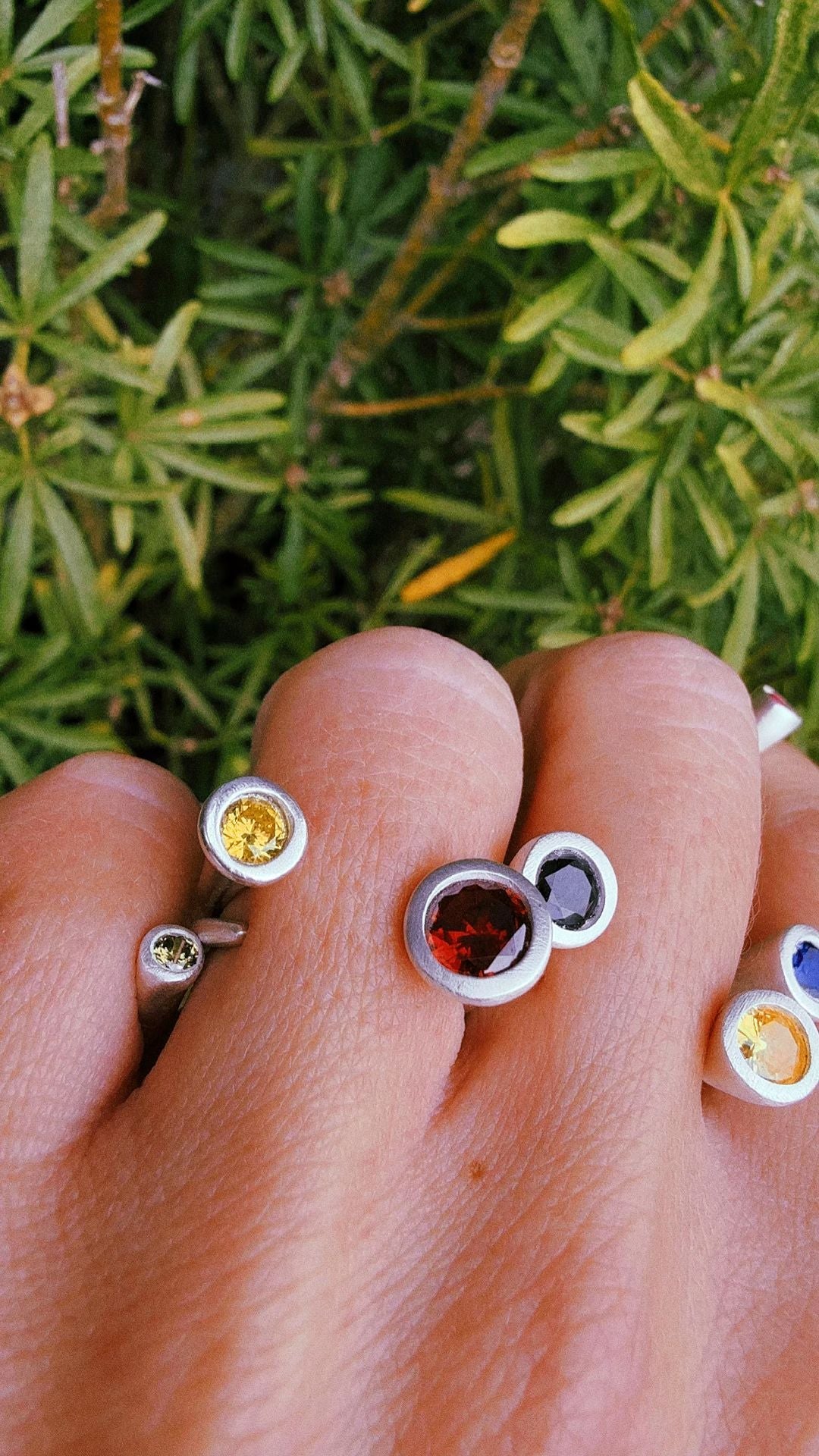
Can sterling silver get wet? Yes, it can. Water will not ruin a sterling silver ring, and a caught shower or a rinse at the sink is nothing to worry about. What matters is what is in the water and how long the metal stays damp afterwards. Some water is harmless, some will dull a piece quickly, and the difference is worth knowing before you go swimming in your favourite necklace.
Can sterling silver get wet? Water itself is not the problem
Silver does not rust. Rust is an iron reaction, and there is no iron in sterling silver, which is 92.5% silver and 7.5% other metals, usually copper. So plain water does no harm on contact.
What does happen is tarnish. The copper in sterling reacts with sulphur compounds, and that reaction speeds up in warm, damp conditions. Water does not cause tarnish, but leaving a piece wet gives tarnish a friendlier environment to get going in. Drying properly is most of the battle.
Showers and baths
A shower now and then is fine. Doing it daily is where people notice a difference, and it is usually the soap rather than the water. Shower gels, shampoos and conditioners leave a film that builds up in engraved lines, around stone settings and inside chain links, and that film dulls the shine and traps moisture.
If you do shower in your jewellery, dry it properly afterwards with a soft cloth, paying attention to anywhere water can sit.
Swimming pools
This is the one to avoid. Chlorine is genuinely hard on silver: it attacks the alloy rather than just sitting on the surface, and repeated exposure leaves a grey film that ordinary polishing struggles with. Over a long enough time it can weaken solder joints and thin chains.
Hot tubs are worse still, because the chlorine is more concentrated and the heat speeds everything up. Take silver off before you get in.
Sea water
Salt water is less aggressive than chlorine but still not kind. It leaves salt deposits that keep working away at the surface after you have dried off, so rinse anything that has been in the sea with fresh water as soon as you can, then dry it.
There is also the practical problem. Cold water shrinks your fingers, and rings come off in the surf more often than anyone expects.
What about fine silver?
Fine silver is 99.9% pure silver with no copper in it, and it is what silver clay becomes once fired. Because tarnish in sterling is largely a copper reaction, fine silver is noticeably slower to discolour. It still is not indestructible, and it is a softer metal than sterling, so it marks more easily. But if you make your own pieces, the everyday water question is a slightly gentler one.
Our guide on how to use silver clay covers what happens during firing and why the finished metal behaves the way it does, and the complete silver clay guide goes into the properties of fine silver in more detail.
A simple rule to remember
Jewellery goes on last and comes off first. On after moisturiser, perfume and hairspray; off before swimming, washing up and the gym. If a piece does get wet, dry it rather than leaving it on the edge of the sink.
Store silver somewhere dry, ideally in a pouch or a closed box rather than open air in a steamy bathroom. A soft polishing cloth once in a while handles anything that does build up.
Make something you will actually wear
None of this should make silver sound fragile. It is a metal people have worn every day for thousands of years, and a small amount of care keeps it looking right indefinitely.
If you would like to make your own, the silver clay starter kit includes the clay, a torch, tools, cubic zirconia stones and instructions, and we ship worldwide with duties covered. Pieces shrink by about 8-10% as they fire, which you simply allow for when sizing, and what comes out is real 99.9% fine silver you made yourself.