

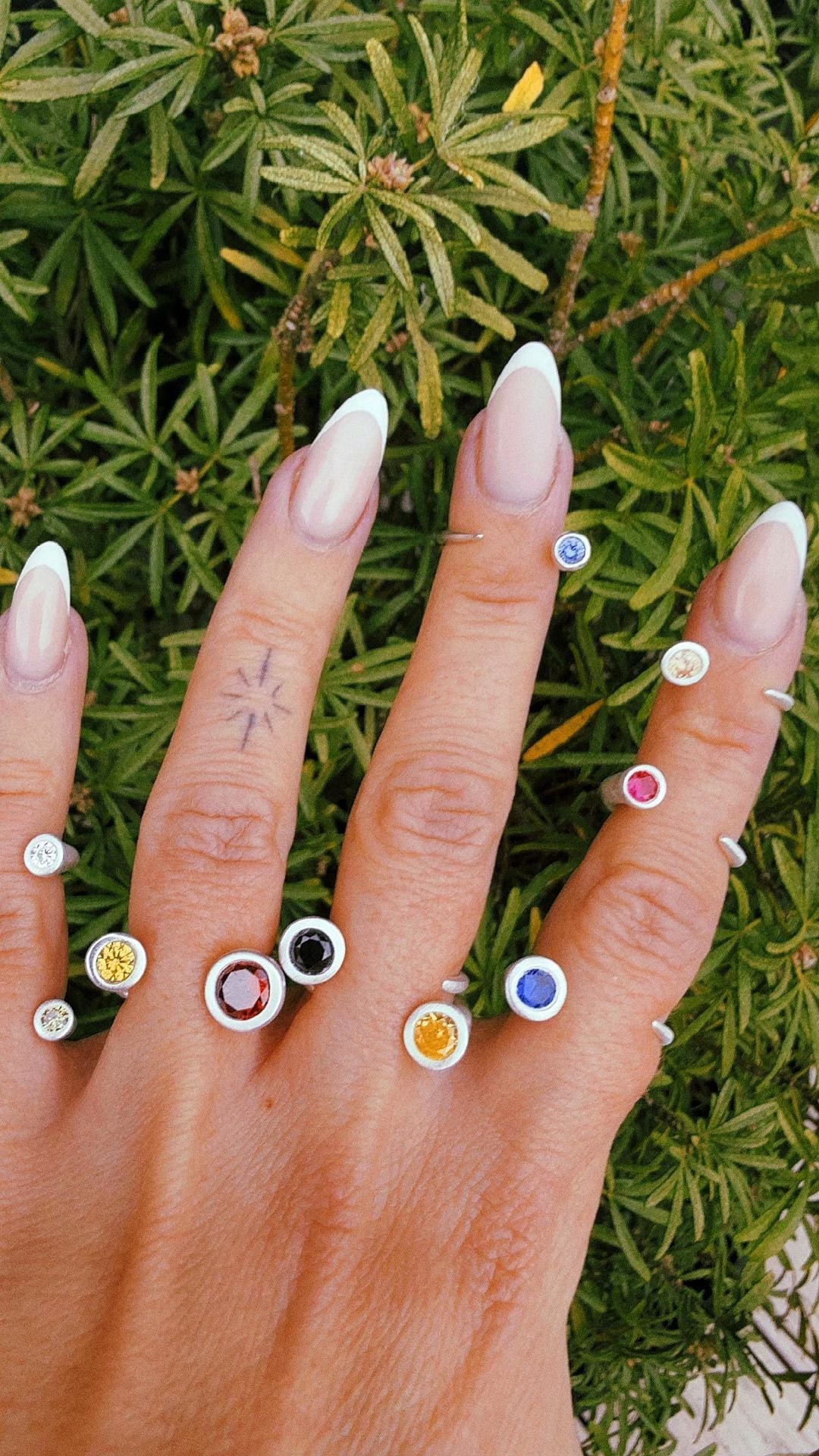
Sterling silver vs white gold is a question that usually comes up when someone is choosing a ring they intend to keep. From a metre away the two look much the same: both are cool, pale and bright. The differences are in what they are made of, what they cost to maintain and how they behave over the years.
What white gold actually is
This surprises people: white gold is not naturally white. Gold is yellow, so white gold is yellow gold alloyed with pale metals such as palladium, nickel or silver to lighten it. Even then it keeps a faint warm tint, which is why most white gold jewellery is finished with a thin plating of rhodium, a bright white metal from the platinum family.
That rhodium layer is what gives white gold its crisp mirror whiteness. It is also the part that wears.
What sterling silver actually is
Sterling silver is 92.5% pure silver with 7.5% of another metal, usually copper, which is what the 925 stamp refers to. There is no plating involved. The colour you see is the metal itself, all the way through, and it stays that colour for the life of the piece.
Fine silver, worth mentioning here, is 99.9% pure silver with no copper. It is a touch brighter and softer than sterling, and it is what silver clay turns into once fired.
Upkeep: plating vs polishing
Here is the real practical difference. White gold needs re-plating. The rhodium wears off gradually, faster on rings than on earrings, and when it does, the warmer tone of the gold underneath starts to show. Most people have a ring re-plated every year or two, and that means a trip to a jeweller and a fee each time.
Sterling silver does not need plating, but it does tarnish, because the copper reacts with sulphur in the air. The difference is that tarnish is a surface thing you remove yourself in a minute with a polishing cloth. One metal has upkeep you pay someone to do; the other has upkeep you do at the kitchen table.
Hardness and durability
White gold is harder than sterling silver and holds stones more securely, which is why it is the usual choice for engagement rings with a prominent setting. Silver is softer and will pick up fine scratches sooner.
Whether that matters depends on the piece. For a solitaire worn every day for decades, hardness is a genuine advantage. For earrings, pendants, bracelets or a ring with a flush-set stone, it makes very little difference to how the piece survives.
Cost
Gold is far more expensive than silver, and the gap is large enough that it often decides the question on its own. Silver lets you own several pieces, try a style before committing, or make something adventurous without the risk feeling expensive. It is also why silver is where most people learn to make jewellery.
Skin sensitivity
Some white gold is alloyed with nickel, which is the most common metal allergy. Palladium white gold avoids it, but it is worth asking. Sterling silver uses copper instead, and fine silver contains essentially nothing but silver, which makes it a straightforward choice if you react to things.
Sterling silver vs white gold: which one to choose
Choose white gold for a hard-wearing ring with a significant stone, where you want maximum durability and you are happy to budget for re-plating. Choose sterling or fine silver for everything else: the pieces you wear because you like them, change often and want to keep looking after yourself.
And there is one thing silver can do that white gold cannot, at least not at home. You can make it yourself. Silver clay is fine silver held in a binder you shape by hand, dry and then fire with a small torch; the binder burns away and leaves 99.9% fine silver, shrinking by roughly 8-10% along the way.
The silver clay starter kit contains the clay, torch, tools, cubic zirconia stones and instructions, and we ship worldwide with duties covered. If you would like to see how it works first, read how to use silver clay or the complete silver clay guide.