

Rhodium plated sterling silver turns up in product descriptions constantly, usually without any explanation of what it means or why it is there. It is not a marketing flourish and it is not a different kind of silver. It is a very thin coating of a different metal applied over the silver, and knowing that changes how you look after the piece — and how long it stays looking new.
What rhodium is and why jewellers use it
Rhodium is a member of the platinum family. It is hard, bright white, and it does not tarnish. Jewellers apply it electrolytically, which deposits a layer typically well under a micron thick over the finished piece.
The reason is sterling silver's known weakness. Sterling is 92.5% silver and roughly 7.5% copper, and it is the copper that reacts with sulphur in the air to produce tarnish. A rhodium coating puts a barrier between that copper and the atmosphere. The piece stays bright, resists scratching a little better, and takes on the slightly cooler, harder white that people associate with white gold.
The part that gets left out
Rhodium plating wears off. Not might — will. It is a coating, and coatings meet skin, fabric, keys, other rings. On a pendant that mostly hangs still it can last for years. On a ring worn daily it often starts to thin within a year or two, first on the underside of the band and the high points of any pattern.
What shows through underneath is the sterling silver itself, which is a slightly warmer, softer white. It is not damage and the piece is not ruined. But the finish becomes uneven, and the only real fix is having it re-plated by a jeweller. That is a recurring cost on a piece you may have bought precisely to avoid recurring costs.
That is the difference between a coating and an alloy, and it is worth seeing the whole range at once. Silver plated versus sterling covers plating over a base metal, vermeil is gold over sterling, and what 925 means explains the mark a rhodium-plated piece still carries underneath its coating.
Rhodium plated sterling silver versus solid fine silver
This is where it gets interesting for anyone making their own jewellery. Rhodium plating exists to solve a problem caused by the copper in sterling. Take the copper out and much of the problem goes with it.
Fine silver is 99.9% pure. With almost no copper present, it tarnishes far more slowly than sterling and it keeps a bright white surface without any coating at all. When it does dull, a polishing cloth brings it straight back, because you are polishing the actual metal rather than a plated skin you could rub through.
Silver clay is made of exactly that. Fine silver particles are held in an organic binder that behaves like modelling clay while you work. You shape it, let it dry, then fire it with a handheld torch. The binder burns away and what is left is 99.9% fine silver, having shrunk by roughly 8-10% in the process. Our guide on how to use silver clay walks through the whole sequence.
Caring for a rhodium plated piece
If you already own rhodium plated sterling silver, a few habits stretch the plating considerably. Put jewellery on last, after moisturiser, perfume and hairspray — those are the things that eat plating fastest. Take rings off for washing up, swimming and the gym. Store pieces separately rather than loose in a bowl where they scratch each other.
Avoid dips and polishing compounds. Silver dips are designed to strip tarnish chemically, and on a plated piece they can strip the plating with it. A soft dry cloth and warm soapy water is the whole routine.
The gentler routine is simple enough: a polishing cloth used lightly, a mild clean at home when it needs one, and sensible storage between wears, which keeps the plating intact for longer than any treatment applied after the fact.
Which to choose
Rhodium plated sterling silver is a good buy if you want a hard, cool-white finish now and you accept it as a surface treatment with a lifespan. It genuinely does look excellent when new.
It also depends on the kind of piece. A plated finish on a ring band meets more friction than the same finish on a pendant or a pair of studs, so the same plating can look worn out on one piece and untouched on another — our guide to types of earrings and jewellery terms is a quick way to think through which forms take the most wear. For the metal side of the decision, 999 fine silver and which silver does not tarnish cover what you get without any coating at all.
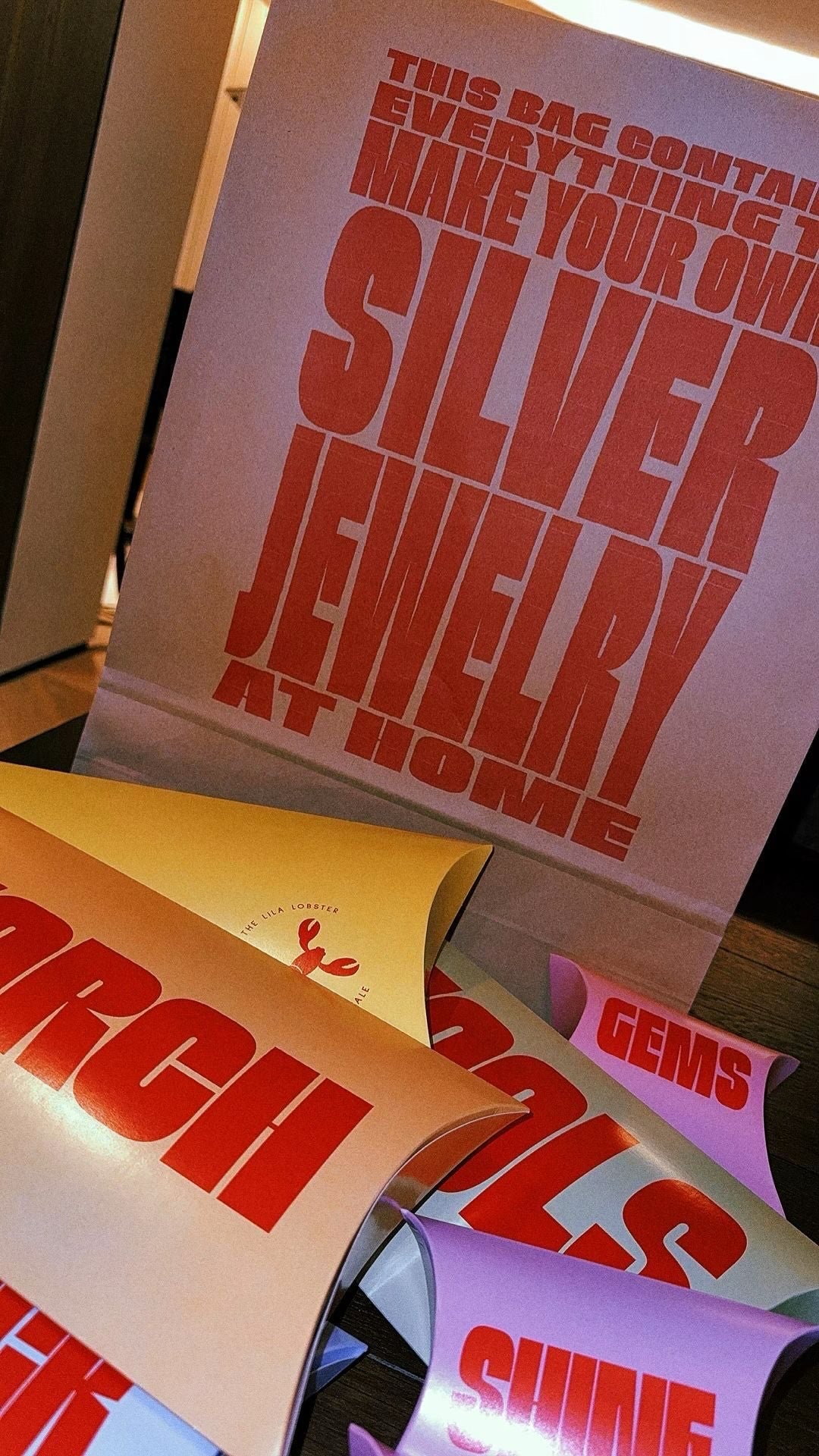
If what you want is a piece that stays the same material forever and never needs re-anything, solid fine silver is the simpler answer. There is no coating to fail because there is no coating. And if you would rather make that piece yourself, the silver clay starter kit contains the clay, a torch, the tools, a cubic zirconia and instructions — enough to finish a first piece in an afternoon. We ship worldwide with duties covered.