

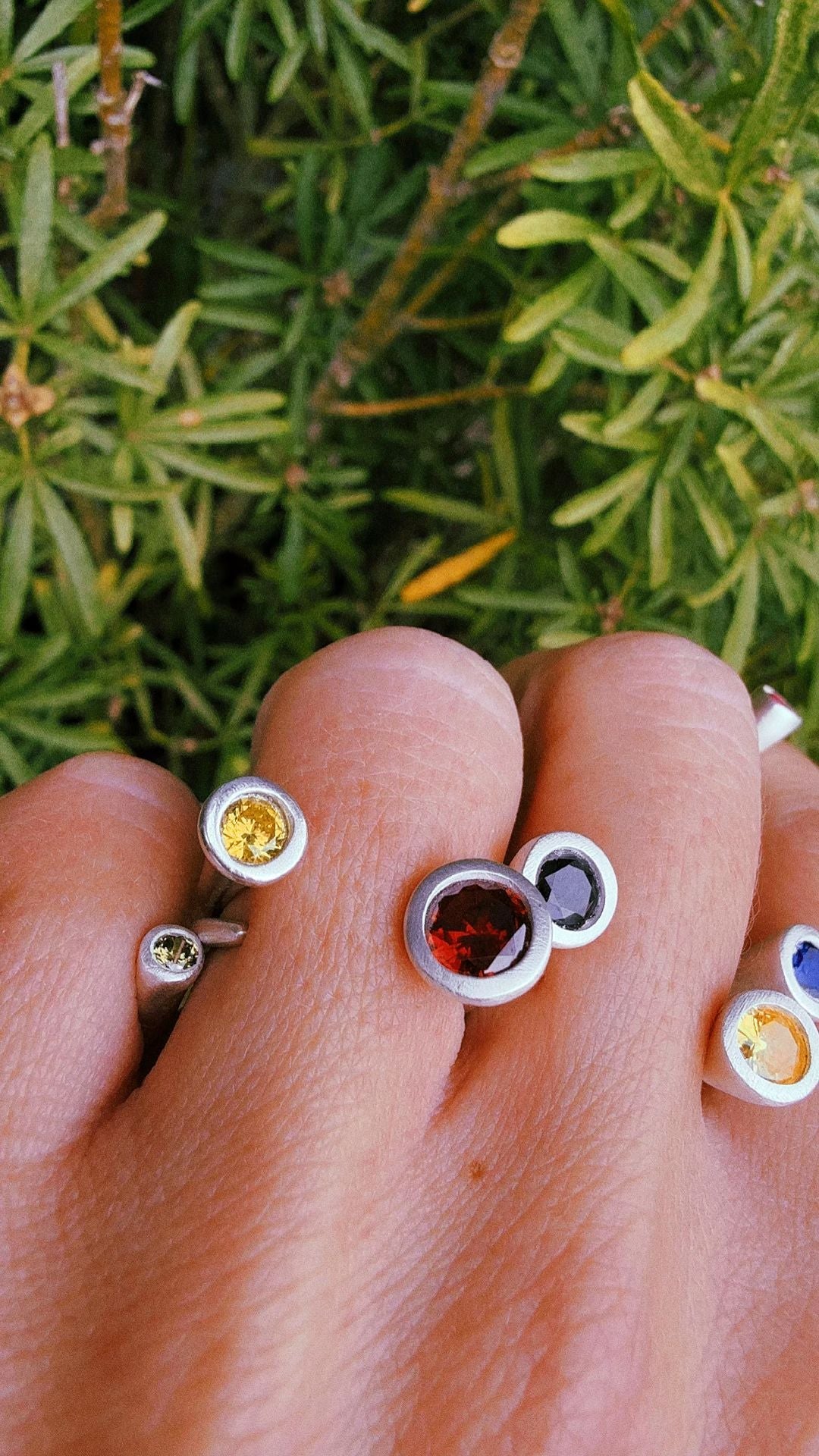
If you have shopped for gold-toned jewellery lately you will have run into the word vermeil, usually without an explanation. So what is vermeil? It is gold over sterling silver, held to a legal standard, and understanding where it sits between cheap plating and solid gold makes it far easier to judge what you are paying for.
What is vermeil, exactly?
Vermeil (pronounced ver-may) is a layer of gold applied over a base of sterling silver. In the United States the term is regulated: the base must be sterling silver, the gold must be at least 10 karat, and the layer must be at least 2.5 microns thick. Other markets are less strict, but reputable sellers generally work to that standard.
Two details do the work there. The base is a precious metal rather than brass, and the gold layer is thick enough to survive real wear. Ordinary gold plating can be a fraction of a micron, over any metal at all.
Vermeil vs gold plated, gold filled and solid gold
Gold plated: a very thin gold layer over any base metal, often brass. Inexpensive, and it wears through quickly at contact points.
Vermeil: at least 2.5 microns of 10k or higher gold over sterling silver. Lasts far longer, and when the gold does wear you are left with silver rather than a metal that may irritate your skin.
Gold filled: a thick gold layer mechanically bonded to a base metal, usually brass. Very durable, but the core is not precious.
Solid gold: gold all the way through. The most expensive, and the only one that cannot wear off.
How long does vermeil last?
With everyday wear, a well-made vermeil piece typically holds its finish for one to three years before thinning becomes visible. Rings go first, because hands take the most abrasion; earrings and pendants last considerably longer. Perfume, hand cream, chlorine and sweat all shorten that life, so put jewellery on last and take it off before swimming.
Vermeil can also be re-plated when it wears, which is a real advantage over plated brass. The sterling underneath is worth restoring.
Is vermeil good for sensitive skin?
Usually yes. Sterling silver contains a small amount of copper rather than nickel, so as the gold thins you are exposed to silver rather than the nickel-bearing alloys used in cheap costume jewellery. If you react to plated pieces, vermeil is a safer choice, although anyone with a confirmed silver or copper sensitivity should still be careful.
Where fine silver fits in
There is a fourth option people rarely consider: skip plating altogether. Fine silver is 99.9% pure, purer than sterling, and it has no coating to wear off, so it looks the same in ten years as it did on the first day. It is softer than sterling, which makes it less suited to thin rings that take knocks, but excellent for pendants, earrings and textured pieces.
It is also the metal you end up with when you make jewellery from silver clay at home. The clay fires to 99.9% fine silver with a handheld torch, shrinking by roughly 8-10% along the way. If you have been buying plated pieces and watching them fade, making solid silver ones instead is a genuine alternative. Our guide to using silver clay covers the process, and the silver clay starter kit contains the clay, torch, tools, cubic zirconia stones and instructions.
The short version
Vermeil is the sensible middle ground in gold-toned jewellery: much better than plating, much cheaper than solid gold, and repairable when it wears. Just know that it is a coating, and coatings have a lifespan. If you want a piece that will not change, buy or make it in solid metal.