

What makes a huggie earring different
A standard hoop leaves a visible gap between the metal and the ear. A huggie does not. The hoop is short in diameter, usually somewhere between 8mm and 14mm, and thicker in profile than a fine hoop, so it reads as a small solid band rather than a ring of wire. Most close with a hinged snap rather than a post and butterfly back, which is part of why they feel so secure.
Compared with a stud, a huggie gives you a little more presence without adding length. Compared with a drop earring, it stays out of the way of scarves, jumpers and long hair. That combination is the whole appeal.
Huggies are one of several lobe styles worth telling apart, and they are easier to choose between when you see them side by side: our guide to types of earrings runs through studs, hoops, drops, threaders, cuffs and climbers, and where each one sits on the ear.
How to wear huggie earrings
Worn alone, a pair of plain silver huggies is about as versatile as jewellery gets. It works with a suit, a t-shirt or a wedding outfit without any thought at all. Worn as part of a curated ear, they sit best in the lobe position, with smaller studs or an ear cuff further up.
A few practical points. If you have more than one lobe piercing, a huggie in the first hole and a stud in the second is the easiest combination to get right. And if you plan to wear them constantly, choose a metal you know you tolerate: solid fine or sterling silver rather than plated base metal, which wears through eventually.
Making your own huggie earrings in silver clay
Because a huggie is a simple shape with no chain, no setting and no soldered joins in the band itself, it is one of the more approachable pieces to make at home. With silver clay you shape the band while the clay is soft, dry it, then fire it with a small handheld torch. What comes out is 99.9% fine silver, because the clay is real silver powder held together with a binder that burns away during firing.
Two things to plan for. The first is shrinkage: silver clay contracts by roughly 8-10% as it fires, so shape the band slightly larger than the finished size you want. The second is the closure. Making a working hinged snap from scratch is genuinely advanced metalwork, so most people making huggies at home shape the silver band and pair it with a ready-made huggie finding, or make a fixed hoop with a simple hook.
One more thing worth checking is the thickness of the pin that passes through the piercing, which is measured in gauge rather than millimetres. Our guide to earring gauge size explains what the numbers mean and which one standard lobe piercings are made for.
If you have not worked with the material before, our guide to using silver clay covers rolling, drying and firing before you commit any clay to a shape.
Texture is where huggies get interesting
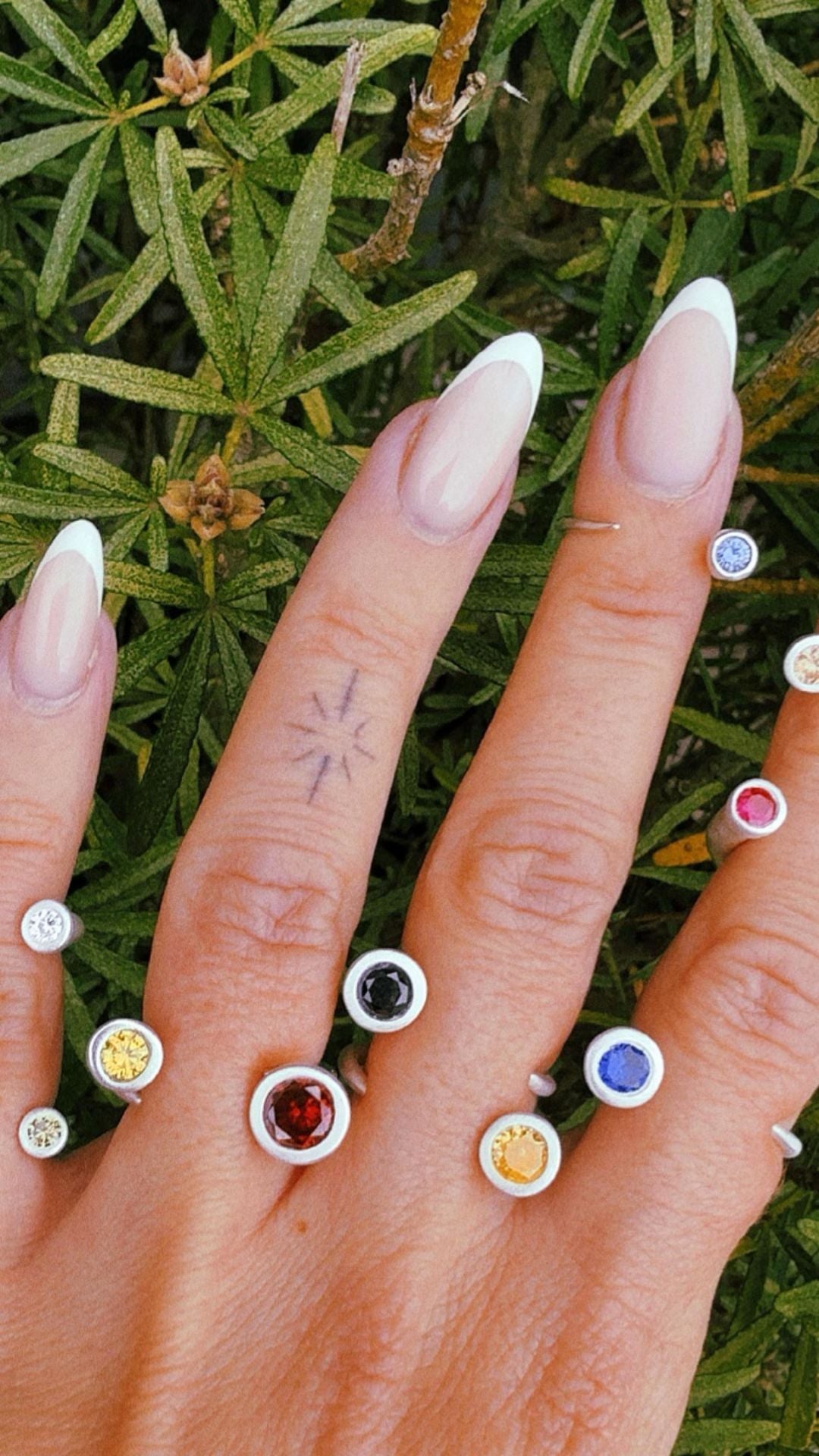
A plain band is a good first attempt, but the flat outer face of a huggie is a small canvas. Pressing the soft clay against a leaf, a piece of lace, coarse fabric or a texture sheet leaves an impression that survives firing and catches the light in a way a polished band never does. A single small stone set flush in the band is another route, and lab-grown cubic zirconia can be set before firing because it survives the temperature.
Looking after them
Fine silver tarnishes more slowly than sterling because it contains no copper, but it will still dull over time in humid air. A dry box or pouch and an occasional pass with a polishing cloth is genuinely all the maintenance a pair of silver huggies needs.
If you want to try making a pair, our silver clay starter kit includes the clay, a torch, the tools, cubic zirconia stones and step-by-step instructions, so you can fire your first piece without a kiln. We ship worldwide and cover import duties.