

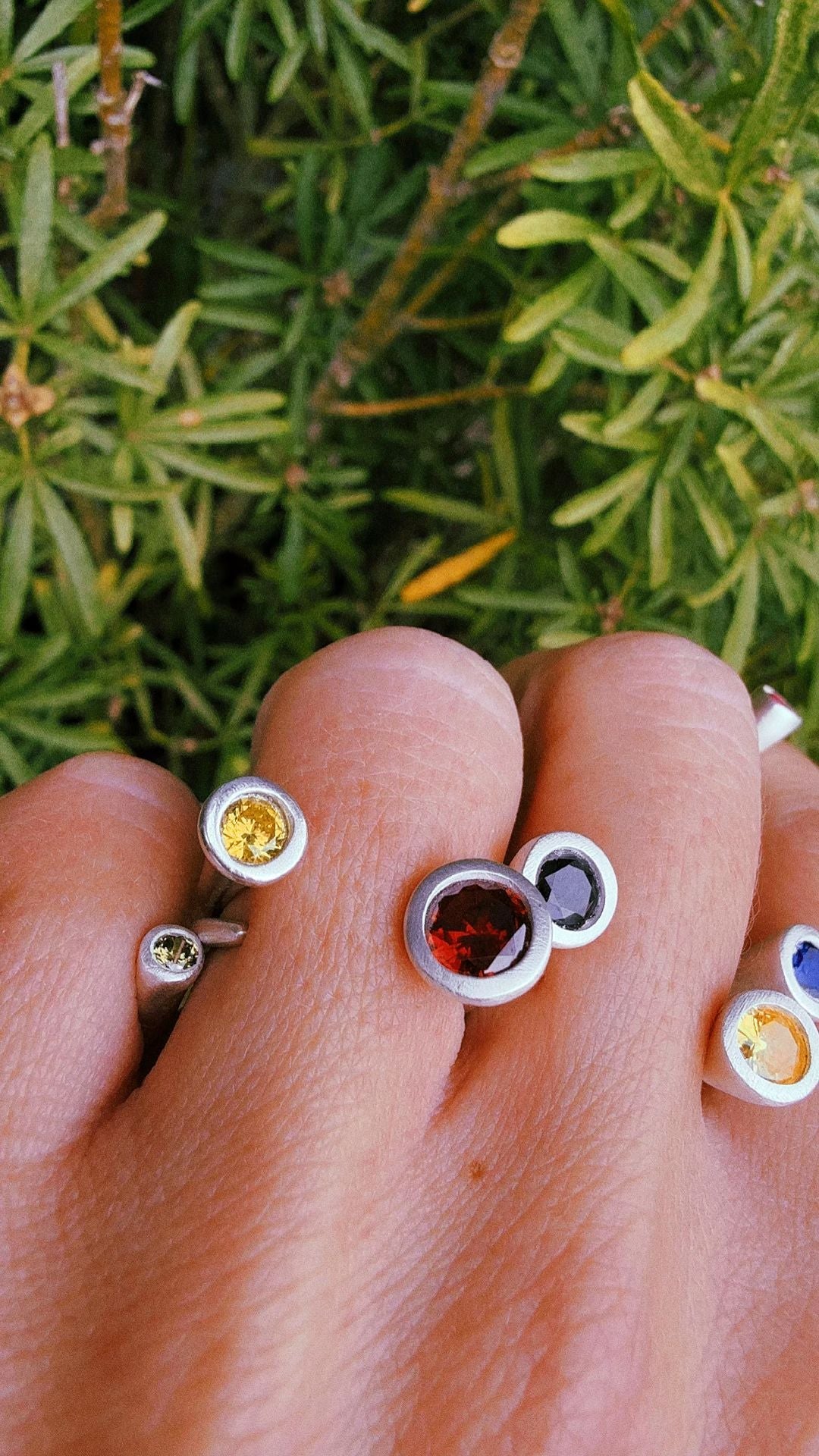
Learning how to store jewelry properly is one of those small habits that pays for itself for years. Most silver does not go dull because it was badly made. It goes dull because of where it sat between wearings: a damp bathroom shelf, a drawer with wool in it, a bag with keys loose in the bottom. A month in the wrong place does more harm than a year of daily wear.
What actually damages jewellery in storage
Three things, in roughly this order. Moisture, which speeds up every reaction happening on the surface. Sulphur compounds in the air, which come from wool, rubber bands, some paints and cleaning products and ordinary city air, and which turn silver grey. And other jewellery: silver is soft enough that a harder stone will scratch it if the two are stored loose together.
Fine silver tarnishes more slowly than sterling because it contains no copper. Pieces made from silver clay are 99.9% fine silver once fired, so they hold their colour longer than a sterling chain kept in the same drawer. They do still tarnish eventually, and storage is what decides how slowly.
How to store jewelry: the container matters
A closed box beats an open dish, and a lined box beats a bare one. Look for soft fabric lining, individual compartments or slots, and a lid that actually shuts. Wooden boxes are fine as long as they are lined; unlined wood can hold moisture and, in some woods, give off acids over time.
Small zip-top bags are unglamorous and very effective, especially for pieces you wear rarely. Press the air out before sealing. If you can add a silica gel sachet or an anti-tarnish strip to the box, do; both are cheap and both work.
Keep pieces from touching
One slot, one piece. Chains tangle and kink, so hang them or lay each one flat in its own bag. Rings with set stones should never be tipped into a shared bowl, because the stone in one ring will mark the metal of the next. If you make your own pieces with a silver clay starter kit, this matters even more in the early days, when the surface finish is fresh and shows every mark.
Where not to store jewellery
Not the bathroom: steam and humidity are the fastest route to a dull surface. Not a sunny windowsill, where heat and light can affect some stones and any enamel or resin work. Not loose in a handbag or a suitcase pocket. And not in a sealed plastic tub with no lining, where condensation can collect and sit against the metal.
Storing handmade silver
Pieces you have made yourself deserve the same treatment as anything bought. Once torch-fired and finished by hand, the surface is genuine 99.9% fine silver and behaves exactly like any other fine silver. Store it dry, separately and out of direct light. For a refresher on how the material changes from soft clay to solid metal, the complete guide to silver clay walks through the whole process.
A five-minute routine
Take pieces off before showering, swimming, exercising and sleeping. Wipe each one with a soft cloth before it goes away, so skin oils and perfume are not left sitting on the metal overnight. Put it back in its own slot rather than on the nearest surface. Once a season, open the box, check for damp and replace the anti-tarnish strip.
None of this is complicated. It is simply the difference between jewellery you keep reaching for and jewellery you have to rescue first.