

Fine silver rings are rings made from 999 silver rather than the 925 sterling most shop-bought jewellery uses. That small difference in the number changes how the ring looks, how it ages and how it behaves on your finger, and it is worth understanding before you buy one or make one yourself.
What makes fine silver rings different
Sterling silver is 92.5% silver with the remainder usually copper. Fine silver is 99.9% silver with essentially nothing else in it. That copper in sterling is what gives it hardness - and also what causes most of its tarnishing, because copper reacts readily with the air.
So a fine silver ring is softer than a sterling one, and noticeably slower to tarnish. It also has a slightly warmer, whiter colour, which people tend to notice when the two are side by side but rarely notice on their own. If you want the full explanation of the hallmark, our post on what 999 silver means covers it.
Are fine silver rings durable enough to wear?
This is the real question, and the honest answer is: yes, with a little awareness. Fine silver is softer, so a plain band worn every day on a working hand will pick up scratches and can very gradually lose its perfectly round shape. Sterling resists that better.
In practice this matters less than it sounds. A ring with texture or pattern hides marks rather than showing them. A slightly thicker band is considerably stiffer than a thin one. And a ring worn on a hand that is not doing heavy manual work holds its shape perfectly well for years.
Where fine silver genuinely repays itself is in low maintenance. It stays bright far longer, so the ring you put away in a drawer for six months comes out looking much the way you left it.
Making fine silver rings at home
Most fine silver rings you will find are handmade, and a large share of those are made from silver clay. Silver clay is a modelling material containing fine silver particles held together by a binder. You shape it by hand, let it dry, and fire it - the binder burns away and the particles fuse into solid 99.9% fine silver.
Two practical points. The clay is torch-firable, so you do not need a kiln for a ring-sized piece. And the piece shrinks by around 8-10% during firing, which is why every ring tutorial tells you to build on a mandrel a couple of sizes up from your finished size. Our step-by-step guide to making a silver clay ring walks through the sizing and the shaping.
Choosing a style that suits the metal
Because fine silver is soft, texture works in its favour. Pressed patterns, hammered surfaces, rough edges and stamped lettering all sit well on it and disguise ordinary wear. Very slim, very polished bands are the least forgiving choice.
Stacking is another good use of it. Several narrow bands support one another on the finger, and if one does distort slightly over time it reads as part of the look rather than a fault.
Where to start
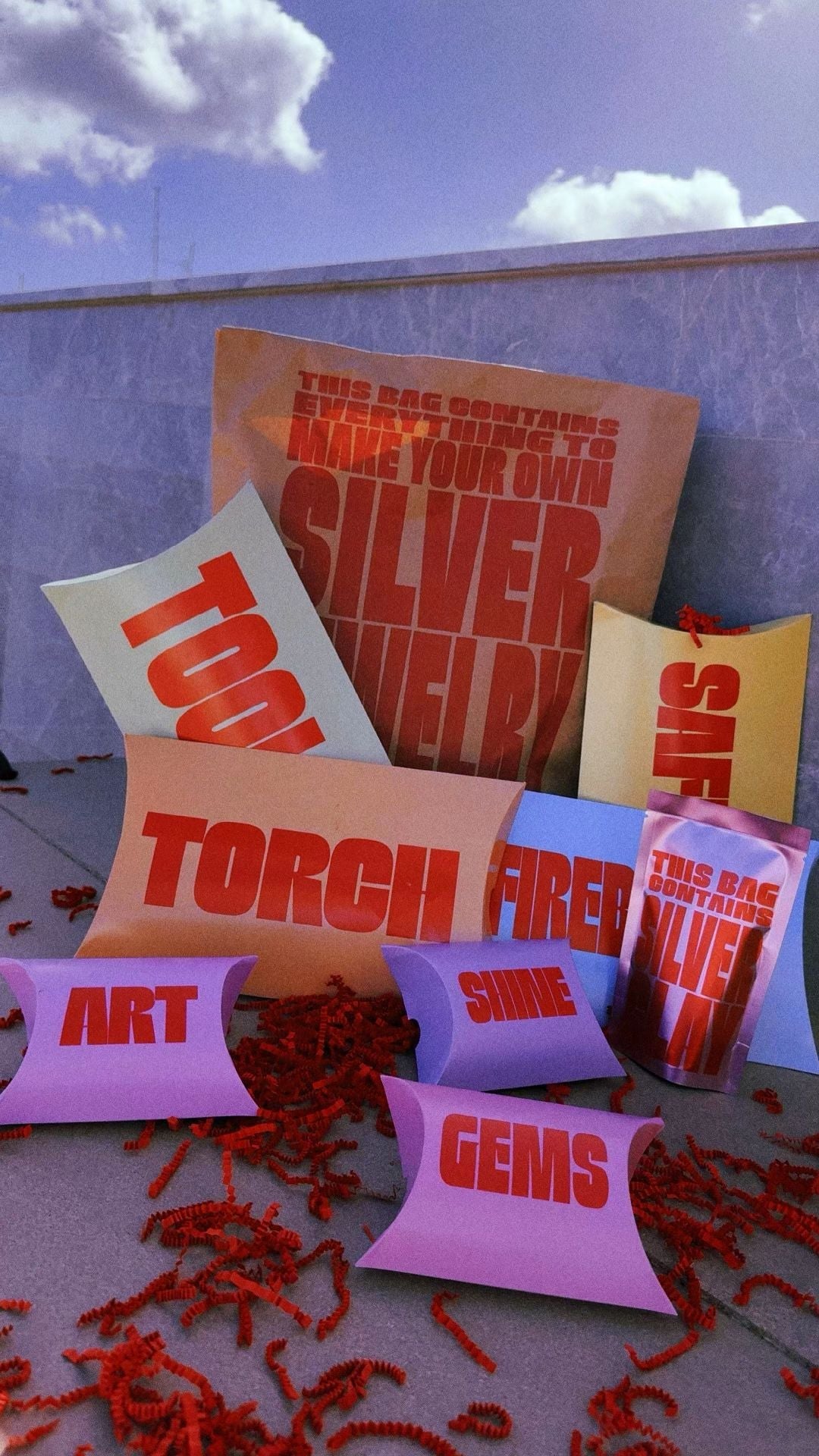
If you want to make your own rather than buy one, our silver clay starter kit contains the clay, a torch, tools, a cubic zirconia and instructions - everything needed for a first ring at the kitchen table. We ship worldwide and cover any duties, so the price you see is the price you pay.