

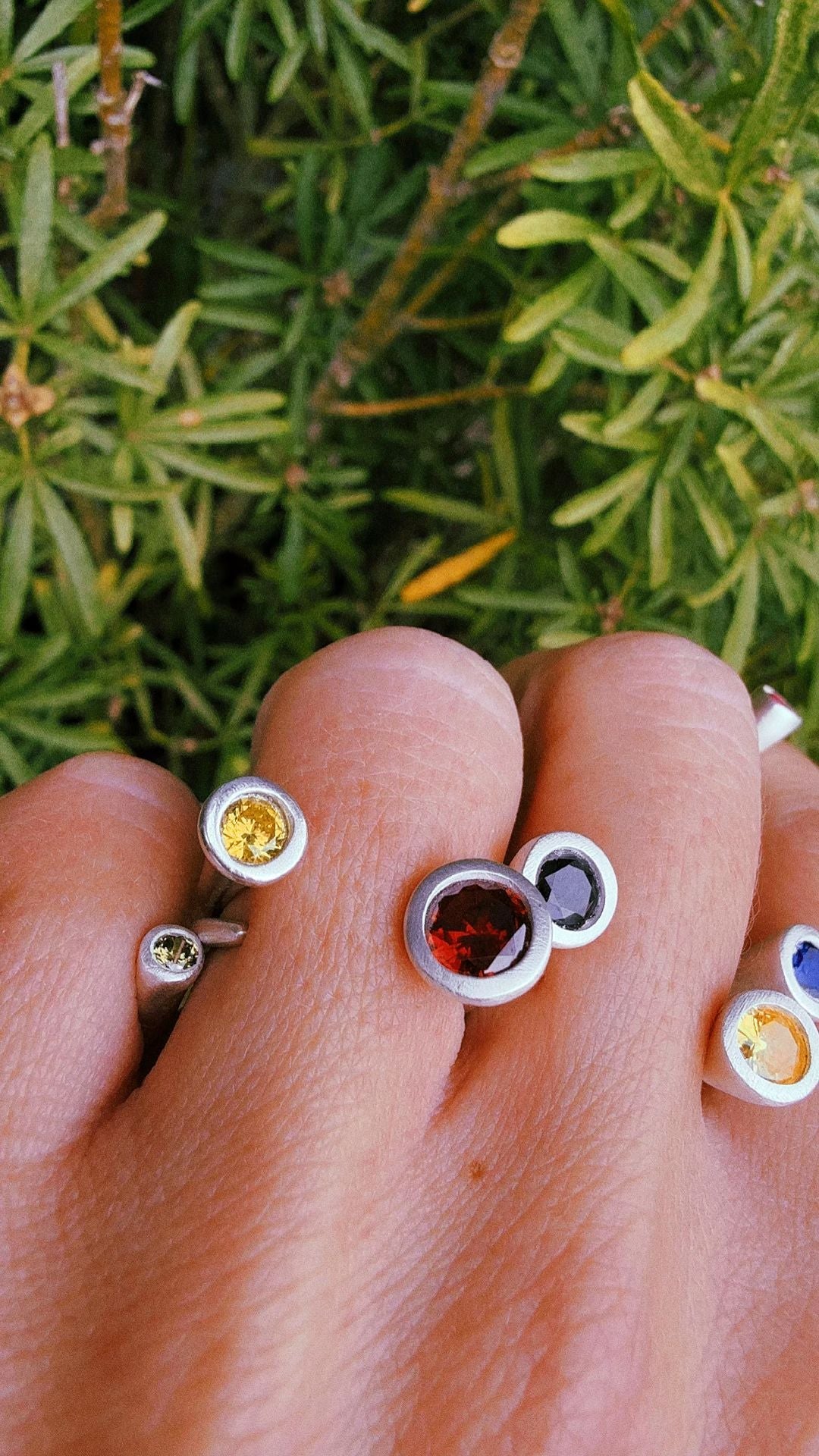
Learning how to resize a ring usually starts with a small disappointment: a ring that spins loose in winter, or one that will not quite clear the knuckle. Resizing is routine work for a bench jeweller, but it is not always possible, and if you made the ring yourself there is often a better answer than resizing it at all.
How to resize a ring: what a jeweller actually does
Making a ring smaller means cutting a section out of the band, closing the gap, soldering the join and then filing, sanding and polishing until the seam disappears. Done well it is invisible.
Making a ring larger is done one of two ways. A plain band can often be stretched on a mandrel, which gains a little size but thins the metal slightly. Beyond that, the jeweller cuts the band and solders in a matching piece of metal, then finishes it the same way.
Some rings resist both. A band with stones set all the way round, a pattern or texture that runs continuously, an engraved inscription, or a very thin band can all make resizing impractical or risky. It is worth asking about before you commit.
Why a silver clay ring is a different case
A ring made from silver clay fires to 99.9% fine silver. Fine silver is softer than sterling, which means it stretches a little more willingly - but it also means a textured or fingerprinted surface distorts as it stretches, and the detail you cared about is the first thing to go.
There is also a more practical point. Resizing at a bench costs time and money, and a small handmade ring often contains less silver than people expect. In most cases it is quicker, cheaper and more satisfying to remake the ring at the right size than to have the original altered.
That is a genuinely different mindset from shop-bought jewellery, and it is one of the quiet advantages of making your own.
Measure properly before you shape anything
Most sizing problems are measuring problems. A few habits help:
- Measure at the end of the day, when hands are at their largest.
- Measure warm. Cold fingers can read a full size smaller.
- Check that the size clears your knuckle, not just the base of the finger.
- Wide bands fit tighter than narrow ones, so allow a little extra.
If you do not have a ring sizer to hand, our guide on measuring ring size with string gets you close enough to work from.
Allow for shrinkage
Silver clay shrinks by roughly 8-10% during firing as the binder burns away and the silver particles fuse. This catches out almost everyone once. A band built at your exact finger size will come out of the flame too small to wear.
So build the ring oversized on the mandrel, not at your finished size, and let the shrinkage bring it in. Write down the size you built at before you fire - after two or three rings you will know your own margin precisely, and you will stop guessing.
Check before you fire, not after
Once the clay is bone dry and before it meets the torch, the piece is still easy to correct. This is the moment to sand the inside of the band slightly wider, or to add a little paste and rebuild if it has gone too far. After firing, your options narrow to the jeweller's bench.
Ten seconds of checking at the dry stage saves an evening of regret.
When resizing is genuinely worth it
Sentiment settles this. An inherited ring, a wedding band, or a piece with a stone you cannot replace should go to a jeweller, whatever it costs. A ring you made last month and can make again should simply be made again, one size larger and rather better than the first attempt.
If you want to try that, the silver clay starter kit includes the clay, torch, tools, a cubic zirconia and instructions, and ships worldwide with duties covered. Our step-by-step ring tutorial takes you through the whole build, sizing included.