
Keepsake jewelry is any piece that carries a specific memory rather than a style: a child's fingerprint, a pet's paw print, a line of handwriting, a date only two people recognise. It tends to be the piece that never leaves the jewellery box. This is the starting point for making one yourself in real silver: the rule that decides whether the project works, how to size and finish it, and which tutorial covers each method.
What counts as keepsake jewelry?
Broader than most people expect, in three forms. Impressions capture a physical mark: a fingerprint, a paw print, a baby's footprint, the texture of a wedding dress. Inclusions set something into the piece: a birthstone, a little ash, a lock of hair, a stone made from preserved breastmilk. Inscriptions record words and numbers: a signature, an initial, a date.
All three can be made at a kitchen table in silver clay, which is fine silver particles held in an organic binder. While it is damp it records very fine detail with almost no pressure; when it is fired the binder burns away, the particles fuse, and what is left is 99.9% fine silver with the mark still in it. It is real silver, not plated and not soldered, and small pieces are torch-firable, so no kiln is needed. How to use silver clay walks through a first piece, and what is metal clay puts it alongside the other metals.
The rule that decides everything: organic things go in after firing
Firing burns the binder away, and anything organic burns away with it. Hair, ashes, fabric, flowers, milk, resin — none survive the flame, and no lower temperature solves it. Any method promising hair or ashes sealed inside solid fired silver is describing something that cannot happen.
The workable approach is always the same: make the silver first, fire it, finish it, and bring the two together at the end. Build a small cup, well, capsule or bezel, fire and polish it, and only then fill and seal it or seat the stone. The silver is the frame; the keepsake is the contents. That matters most when a first attempt cracks: fired inside, the irreplaceable thing is gone; done this way, a failed attempt costs clay and an afternoon.
What can be fired in place
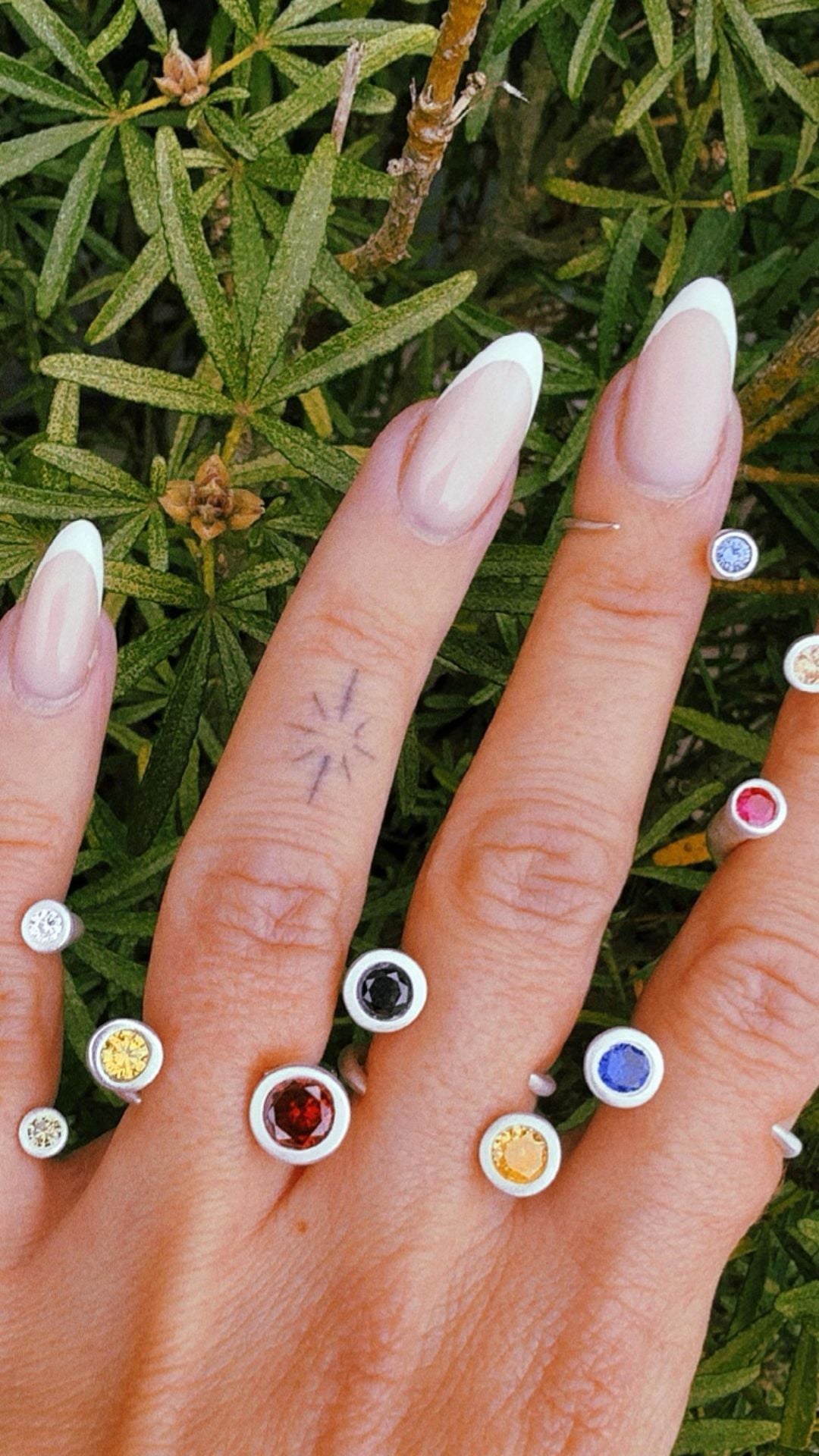
One useful exception: cubic zirconia survives the flame, as do lab-created corundum and spinel, which is why the stones in our kit can be pressed into the clay before firing. Advice on natural stones is mixed, so the conservative line is to fire only cubic zirconia and lab-created stones and set everything else cold — setting gemstones in silver clay covers how.
Keepsakes made from an impression
Impressions are the most forgiving place to start: you press, the detail stays, and firing sharpens it.
Fingerprints and thumbprints
No two prints are alike, so the piece cannot be duplicated by a factory or by you a second time. Wash and dry the finger first, because oil softens the ridges. Press straight down, firmly, once — rocking smears the print — then lift straight up, and check the impression in low, raking light before committing. Full walkthroughs: fingerprint necklace and fingerprint ring.
Paw prints
Do not press a paw into the clay directly: paws carry oils, grit and hair, and most animals object to the pressure a crisp impression needs. Take the print in moulding putty or plasticine first, lay the clay over that negative, and try three or four times before picking the best. Paw print jewelry covers the transfer; pet hair memorial jewelry covers keeping the hair too.
Handwriting, dates and lettering
A signature or a short line from a card traces into soft clay with a fine tool. Keep it short: one word reads better than a sentence, and numbers press cleanly. Letter stamps give a crisper character — see hand stamped jewelry. An initial on a band is a good first project: make an initial ring at home, and engraved silver rings compares the lettering methods.
Textures from an object
A leaf from someone's garden, the weave of a fabric they wore, the pattern on an old button: press it in, lift it away, the detail stays. For repeatable textures, or a shape you cannot press directly, your own moulds and texture sheets are the two routes.
Keepsakes that hold something inside
When the keepsake is a material rather than a mark, you need a vessel or a setting. Three shapes suit a beginner: a shallow cup pendant with a raised rim; a thick disc with a domed well pressed in while the clay is soft; and a two-part capsule joined after firing. Keep it small: a keepsake that gets worn beats an ambitious one in a drawer, and small pieces fire more forgivingly.
A hinged locket is genuinely difficult in metal clay, so a sealed capsule on a chain is the realistic version of that idea — locket necklaces explains the difference. For a preserved stone, resin or milk, the job is a bezel sized for shrinkage: ashes to jewelry, DIY breastmilk jewelry, bezels and what is a cabochon. Paste joins the parts; the syringe adds fine raised work.
Keepsakes that stand for a person rather than hold a mark
Not every keepsake needs a physical trace — a plain silver disc on a chain is a quiet thing to wear daily and the easiest piece here to make well. Beyond that the shorthand is a stone, a flower or a symbol: a birthstone ring, mother and child birthstone jewellery, a birth flower in silver, or a Claddagh, promise or signet ring — and where a ring sits on the hand carries its own meaning.
Pieces made as a pair work the same way: friendship necklaces, matching jewellery for couples, or charms added one occasion at a time. A keepsake can also start from jewellery you already have: heirloom jewellery and what to do with old jewellery cover reworking an inherited piece into something that gets worn.
Sizing: plan for shrinkage before you commit
Silver clay shrinks by roughly 8–10% as it fires, and every part shrinks with it — outline, lettering, hanging hole, the recess you carefully made. Silver clay shrinkage has the detail; three consequences cover keepsake work.
Make the hanging hole while the clay is soft and a little larger than you think you need; dry clay is brittle and chips. Build a bezel or well oversized by about a tenth — padding a loose setting is far easier than rescuing one that has closed up, and a bone-dry opening widens with a file in seconds. For a ring, work a size or two above the finished size on a ring mandrel; measure the finger with string first, because resizing a fired ring is harder than getting it right in clay. And keep the piece thicker than feels necessary: a thin pendant is fragile exactly where the impression is deepest, which is where it will eventually bend.
Firing and finishing so the detail reads
Let the piece dry through completely before it goes near heat. A pendant or ring fires with a handheld torch on a heatproof surface: torch firing step by step covers the sequence and firing temperature explains what the metal's colour tells you.
Straight out of the flame the silver is chalky white; brushing brings up a satin surface and burnishing the raised areas takes them to a shine. For any impressed detail the trick is contrast: polish the flat surface and leave the recesses matt and slightly darker. That difference in tone is what makes a fingerprint legible at arm's length rather than only close up. Liver of sulphur pushes it further — see oxidised silver. A tumbler evens out a batch, and keum-boo or enamel add colour once the basics are comfortable.
Then hang it. Bails, jump rings and the other findings decide how it sits; chain types and the length chart settle what it hangs from. Fine silver is nickel free, which matters for sensitive skin.
What you need to make one at home
Clay, something to roll it evenly, a way to cut a clean shape, and a heat source. The silver clay starter kit brings the clay, torch, tools, cubic zirconia and instructions together in one box — what's included goes through it item by item. If you already have tools, silver clay on its own is the one to order; compare every pack on the silver clay collection or browse supplies. The tools worth having early, tips and tricks and jewellery making for beginners are worth a read first. We ship worldwide and cover the duties.
Make a practice piece first. Always.
Almost nobody makes the piece they pictured on the first attempt, which is better known in advance than discovered on a difficult day. Build a practice version with nothing riding on it, learn where your own shrinkage and fit land, then make the real one. There is no deadline either: if you are not ready, wrap the clay and come back another month. Memorial jewellery after losing a mother says more, and it applies to every piece here.
Keepsakes for particular people and occasions
A first keepsake is usually for someone else, and the occasion suggests the form. For a new baby, a push present or a christening gift; for a child growing up, jewellery for a daughter, a sweet sixteen piece, graduation jewellery or a keepsake for a son. For grandparents, jewellery for grandma; for a partner, silver anniversary ideas, engagement and wedding gifts, or a permanent bracelet. Mother's Day is the most common reason people start.
Still deciding? Our gift ideas hub and silver clay ideas are the pages to browse, and the customer showcase shows what people at this level produce.
Looking after a keepsake
Fine silver is the least tarnish-prone silver in common use, a quiet advantage of a keepsake in 999 silver rather than sterling — which silver doesn't tarnish explains why. It is also softer, so daily wear brings fine scratches; a polishing cloth restores the shine in a minute, cleaning silver at home covers the gentle methods and how to store jewellery keeps it bright between wears. Avoid dips and harsh cleaners on darkened recesses, which strip the contrast you worked for.
Frequently asked questions
Can ashes or hair be fired inside the silver? No — firing burns organic material away and leaves a void. Make and fire the silver first, then seal them in afterwards.
Do I need a kiln? Not for these pieces. Silver clay is torch-firable, and a small handheld torch fires a pendant or a ring on a heatproof surface.
Is it real silver? Yes — 99.9% fine silver once fired, nothing plated and nothing soldered.
Will the fingerprint still be clear after firing? Usually clearer — the 8–10% shrinkage tightens the ridges. Most of the clarity comes from pressing cleanly and from polishing the flat surface while leaving the recesses dark.
How long does it take? An afternoon plus drying time — most people leave the piece overnight before firing, so it spreads over two sessions.
Can children make one? They can take the impression and older children most of the shaping; firing is an adult job. See jewellery making with children.
Where to start
Pick the method that matches what you have: a mark to press, something to seal in, or a word to inscribe. Read how to use silver clay once through, then make the pendant or the ring as a practice piece. The starter kit holds the clay, torch, tools, cubic zirconia and instructions, and extra silver clay gives room to practise first.
This guide is about what a piece carries; its companions are about what it is. Types of earrings is the glossary hub for the forms a keepsake can take, with types of bracelets beside it.
Then make the real one. It will be small, oddly specific, impossible to buy, and still here in fifty years.