
Sooner or later, most people who work with silver clay start wondering about colour. Enamel on metal clay is the traditional answer: glass fused permanently onto the metal, in colours that never fade the way paint or resin can. It is a genuinely rewarding next step, but it is a second craft rather than an extra step, and it helps to know what you are taking on before you buy anything.
What enamel actually is
Vitreous enamel is finely ground glass. You sift or wet-pack it onto clean metal, heat it until it melts and flows, and it cools to a hard glassy surface bonded to the piece. It is not a coating that sits on top — it fuses. That is why enamelled jewellery from a century ago still holds its colour, and why the technique has stayed in use for so long.
Why fine silver suits enamel on metal clay
Fired silver clay is 99.9% fine silver, and fine silver is one of the friendliest bases enamel can sit on. There is no copper in it, so you do not get the firescale and dark oxides that form on sterling and muddy the colours. Transparent enamels in particular stay bright, because the silver underneath keeps reflecting light back through the glass. If you want to understand what happens to the clay before that point, our complete guide to silver clay covers the whole process.
Fire the silver first, then the enamel
The order matters. Silver clay has to be fired first, so the binder is gone and the metal is fully sintered. Only then do you clean the surface and enamel it. Trying to do both at once does not work: the binder burning off will ruin the glass, and the piece will still shrink by around 8 to 10% as it sinters, which would crack any enamel already sitting on it.
Clean metal is the other rule. Enamel bonds to bare, grease-free silver, so the piece is brushed and rinsed and then handled as little as possible before firing.
What you need beyond your clay and tools
Enamelling is its own kit: powdered enamels, a sifter or fine brush, a firing support such as a trivet and mesh, and something to hold heat steadily. A torch can be made to work for small pieces, but enamel is far less forgiving than silver about uneven heat, and most people who stay with it end up using a kiln. Fine ground glass also needs sensible handling — a dust mask and good ventilation are standard practice.
Simpler ways to add colour first
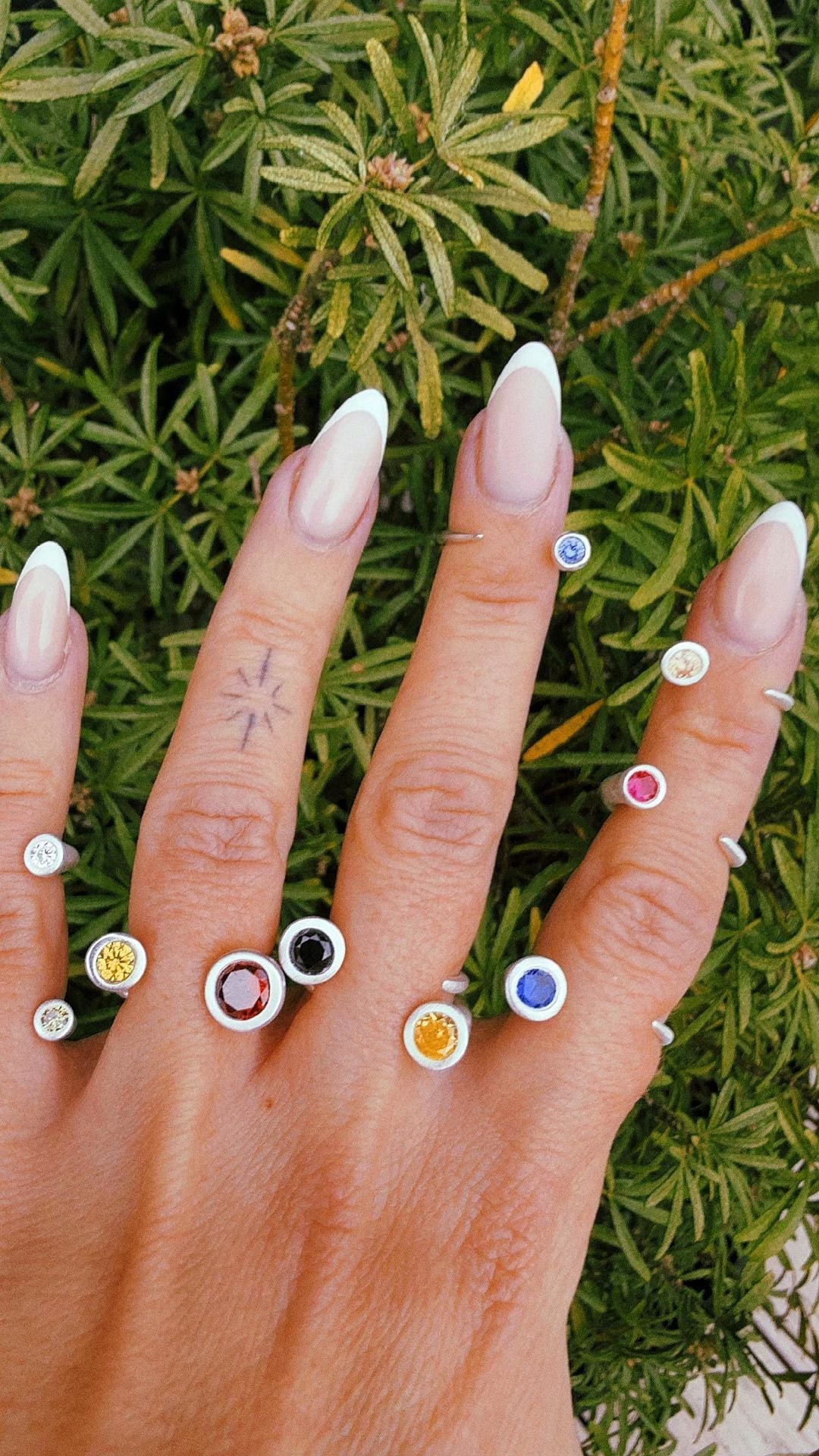
If you are not ready for a second set of equipment, there are two easier routes. Set a coloured stone: lab-grown cubic zirconia is heat-stable enough to be placed in the clay before firing, which gives you colour in a single step. Or use texture and patina — deep stamping and a darkened background give a lot of contrast without any glass at all.
Is it worth trying?
If you enjoy the making as much as the wearing, yes. Enamel gives handmade silver a depth that nothing else quite matches, and fine silver is the best possible surface to learn it on. Just treat it as a new skill with its own learning curve, and start on small, flat, simple pieces rather than your most ambitious design.
To make the silver itself, our silver clay fires to 99.9% fine silver with a torch, and the starter kit adds the torch, tools, a cubic zirconia and instructions. We ship worldwide with duties covered.