

It is one of the first questions people ask, and it is a sensible one: can you fire silver clay in the oven at home instead of buying anything extra? The short answer is no. A kitchen oven cannot get anywhere near the temperature silver clay needs. But an oven is still genuinely useful in the process — just at a different stage — and that is where most of the confusion comes from.
What firing actually does to silver clay
Silver clay is fine silver particles held together by a water-based organic binder. Firing does two things: it burns the binder away, and then it sinters the silver — the particles fuse into one solid piece of 99.9% fine silver. Sintering is why the piece comes out as real metal you can polish, and why it shrinks by roughly 8 to 10% as the gaps between particles close up.
So can you fire silver clay in the oven?
No. Sintering silver needs several hundred degrees more than a domestic oven can produce. A household oven tops out somewhere around 250°C (roughly 480°F); silver sinters far above that. Put a piece in the oven and you will drive off the moisture and scorch the binder, but the silver particles never fuse. What you take out looks vaguely right and crumbles the moment you handle it — a dry, chalky object rather than metal.
Where the oven does help: drying
This is the part worth knowing. Before firing, a piece has to be bone dry, and thick or detailed pieces can take hours to dry at room temperature. Gentle warmth speeds that up enormously. A warm (not hot) oven, a hotplate or even a radiator will do it. Drying is not firing — you are only removing water, and the piece stays fragile until it has been properly fired.
A dry piece is noticeably lighter, uniform in colour, and does not fog a mirror when held against it for a few seconds. Firing a piece that is still damp is one of the most common causes of cracking and blistering.
What actually fires silver clay
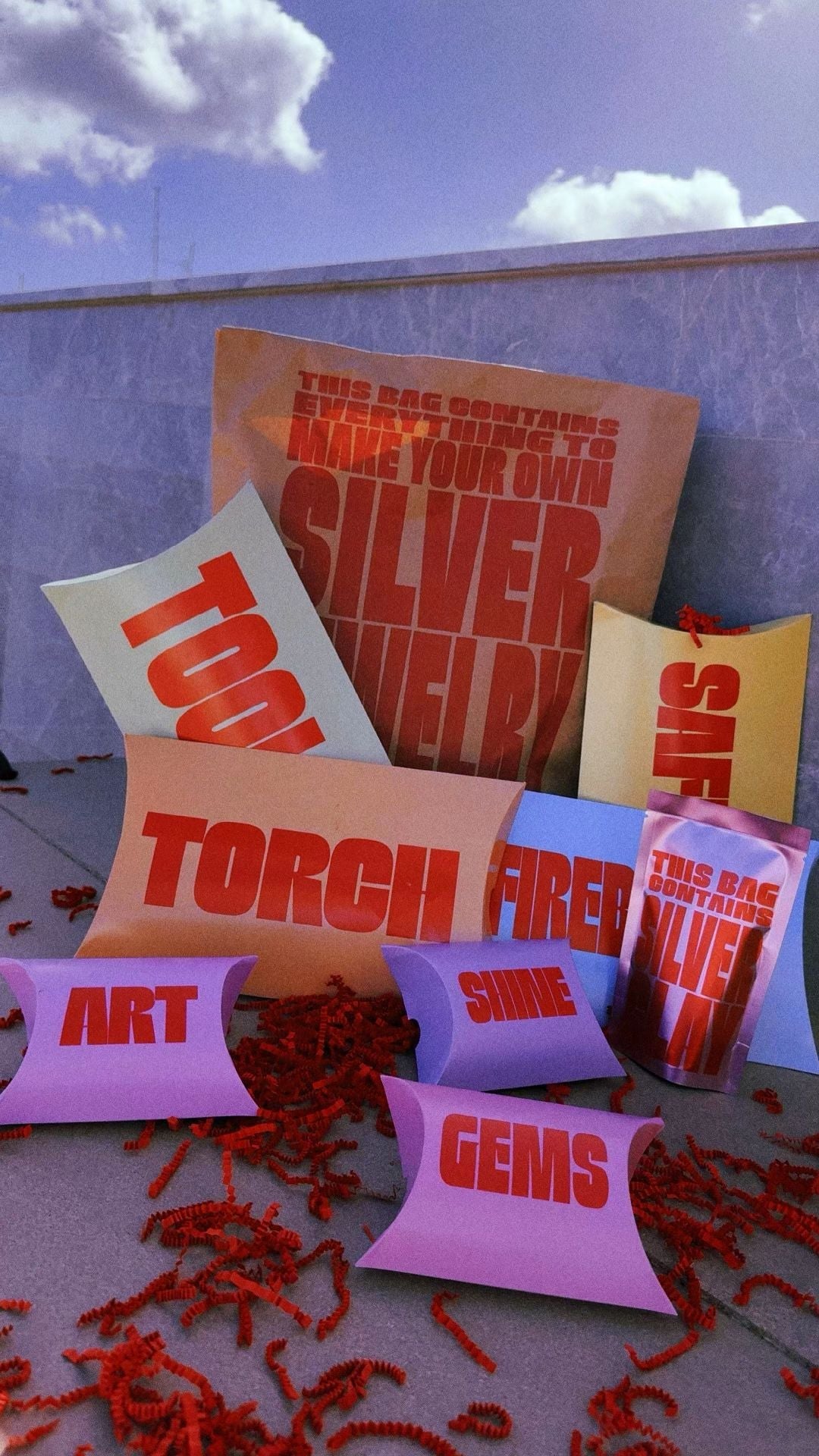
Two methods do the job properly. A small handheld torch is the one most people at home use: it reaches sintering temperature quickly, costs little, and is what the silver clay starter kit is built around, alongside the clay, tools, a cubic zirconia and instructions. A kiln is the other option — slower to buy into, but it holds a controlled temperature and suits larger or more complex pieces.
Both routes are covered step by step in our beginner walkthrough of how to use silver clay.
Where the myth comes from
Polymer clay is oven-cured, at ordinary domestic temperatures, and the two materials sit side by side in craft shops. Silver clay looks similar in the hand but behaves completely differently: one sets a plastic, the other fuses metal. If a set of instructions tells you to bake at 130°C, you are reading a polymer clay guide.
The short version
Use the oven to dry, never to fire. Then reach for a torch or a kiln and let the piece come out as real silver. Not sure which? Read kiln or torch for silver clay, check the exact times in our firing chart, or see the silver clay firing temperature explained. If you would like the full picture first, our complete guide to silver clay covers every stage from shaping to polishing. We ship worldwide with duties covered.