
Once you discover metal clay, you quickly find out it is not only a silver thing. Bronze metal clay, copper clay and even gold clay all work on the same idea: metal powder held in a binder that you shape by hand and then fire. They are not interchangeable, though, and the differences matter far more than the colour. Here is an honest comparison, so you can pick the one that suits what you actually want to make.
The idea they all share
Every metal clay is metal powder plus a binder. You shape it while it is soft, let it dry, then fire it. The binder burns away, the metal particles fuse together, and you are left with solid metal that has shrunk a little along the way. That is true of silver, bronze, copper and gold clay alike. What changes from one to the next is the metal itself, how it has to be fired, and how the finished piece behaves over the years.
Silver clay
Fine silver clay fires to 99.9% fine silver and shrinks by roughly 8-10%. It is the friendliest member of the family for one specific reason: it is torch-firable. You can make a finished, wearable piece at your kitchen table with a small handheld torch, in an afternoon, without buying a kiln.
Fine silver is also slower to tarnish than sterling, it takes a bright polish, and it is easy to file and sand once fired. If you are choosing your first metal clay and you want to end up with something you will actually wear, this is the sensible starting point. Our complete silver clay guide covers how it works from start to finish.
Bronze metal clay
Bronze clay fires to a warm, golden-brown metal and costs considerably less per gram than silver, which makes it tempting for larger or bolder pieces. The catch is the firing. Bronze is a base metal, so it oxidises when it meets hot air, and it normally has to be fired in a kiln, buried in activated carbon to keep oxygen away from the surface.
In practice that means a kiln, a firing pan, carbon, and a schedule measured in hours rather than minutes. Shrinkage also differs from silver and varies by brand, so it is worth checking the manufacturer's own figures rather than assuming. None of this is difficult, but it is a different hobby from torch-firing a pendant on a Sunday afternoon.
Copper metal clay
Copper clay behaves much like bronze. It is inexpensive, it fires to a rich reddish metal, and it also needs kiln firing in carbon for the same reason. Copper darkens and patinates over time, which some people love and others find frustrating, particularly in rings and earrings that sit against skin. If you like the look of aged metal, copper is rewarding once you have a kiln.
Gold metal clay
Gold clay exists and does exactly what you would expect, but the price puts it in a category of its own. Most people who use it use it sparingly, as an accent on a silver piece rather than as the whole piece. Worth knowing about, but not where anyone should begin.
Which should you choose?
If you want to make real jewellery at home without buying equipment first, silver clay is the practical answer. It is the only one of the four you can reliably fire with a torch, and what you take off the brick is precious metal you can wear straight away.
Bronze and copper make far more sense later, once you already own a kiln and want to make larger pieces without watching the material cost. Think of them as a second material rather than a first one. Plenty of people who work in bronze today started with a torch and a small piece of silver clay.
Where to start
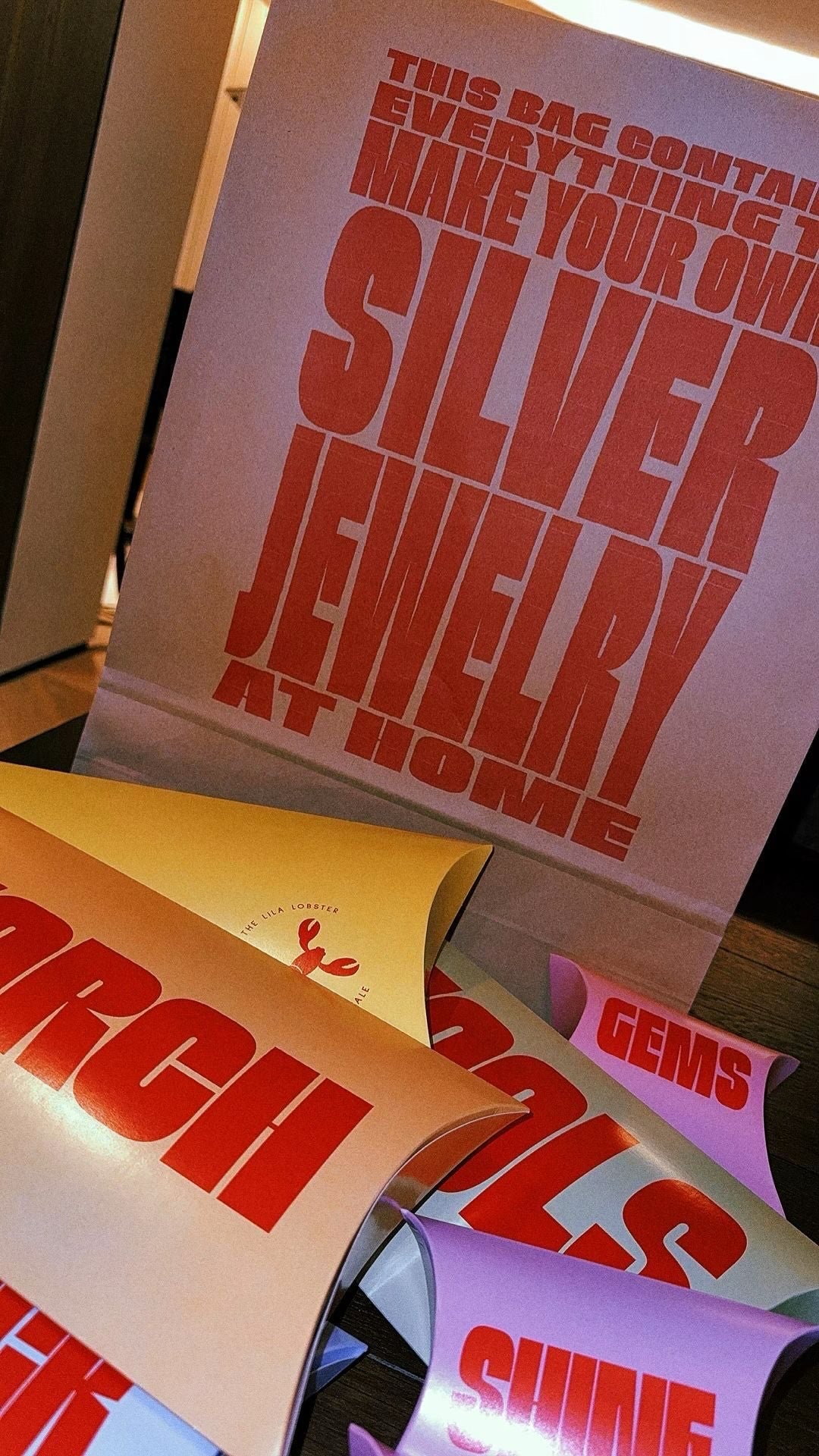
Our silver clay starter kit contains the clay, a torch, the tools, cubic zirconia stones and printed instructions, so nothing has to be worked out in advance. If you already have tools, you can order silver clay separately. We ship worldwide and cover import duties, so there are no surprises on delivery.
Bronze and copper clay are genuinely enjoyable materials. They are simply not the ones to learn on.