

Texture sheets for metal clay are one of the quickest ways to make a simple piece look considered. Roll the clay, press a sheet into it, and a plain disc becomes a pendant with lace, bark, linen or a geometric pattern across its surface. Once fired, that pattern is permanent fine silver. This guide explains what texture sheets are, how to choose between them, how to use them without the clay sticking, and what to reach for when you do not own any sheets at all.
What texture sheets for metal clay actually are
A texture sheet is a thin, flexible sheet, usually rubber, silicone or plastic, with a raised or recessed pattern on one side. You press it into soft clay to transfer the pattern. Sheets sold for polymer clay generally work for silver clay too, because the clay is soft at the moment you texture it and the sheet never goes near heat. Rubber stamps, embossing folders and even textured craft papers do the same job.
Two things matter more than the brand: the depth of the pattern and the flexibility of the sheet. Deep patterns give bold, easy-to-read texture but need thicker clay. Shallow patterns look refined but can disappear if you sand too enthusiastically afterwards. A flexible sheet peels away cleanly; a rigid one has to be lifted straight up, which is harder on a small piece.
How to use a texture sheet without tearing the clay
The whole process takes a minute, but the order of steps matters.
First, lightly oil the sheet. A thin film of olive oil or balm on the patterned surface stops the clay from gripping it. Too much oil and you lose fine detail, so wipe off any excess.
Second, roll the clay to an even thickness on a non-stick surface. Use spacers on either side of the clay so your roller rests on them, which keeps the sheet from being pressed unevenly.
Third, lay the sheet pattern-side down on the clay and roll once, firmly, in a single direction. Rolling back and forth doubles the impression and blurs it.
Fourth, peel the sheet away from one corner. If the clay lifts with it, the sheet needed more oil or the clay is a little too wet; let it sit for a moment and try again.
Finally, cut your shape from the textured slab and let it dry completely before you sand the edges or fire it. The how to use silver clay guide covers drying and firing in detail if you are new to the material.
Allow for shrinkage in your pattern
Silver clay shrinks by roughly 8 to 10% when it is fired, and the texture shrinks with it. Very fine patterns become a touch finer, which usually looks good. Lettering or tiny repeating motifs can close up slightly, so if crispness matters, choose a slightly bolder pattern than you think you need. After firing you are left with 99.9% fine silver, and the texture is part of the metal itself, not a surface finish.
Textures you already own
You do not need to buy a single sheet to start. Some of the best textures come from ordinary objects: a leaf pressed vein-side down, a scrap of lace, coarse linen, the sole of a trainer, the back of a shell, a fern, a brass key, or a piece of sandpaper. A fingerprint pressed into a small disc is a classic. Anything with a defined surface that can take a little oil will work, and natural objects give patterns nobody can buy.
Keep a small box of found textures next to your clay. Over time it becomes a personal library, and pieces made from it are recognisably yours.
Making texture stand out after firing
Straight out of the torch, textured silver looks matte white. Brush it with a brass brush to bring up the shine, then polish the high points while leaving the recesses matte. That contrast is what makes a texture read from across a room. If you want more depth, a patina darkens the low areas so the pattern really shows.
Getting started
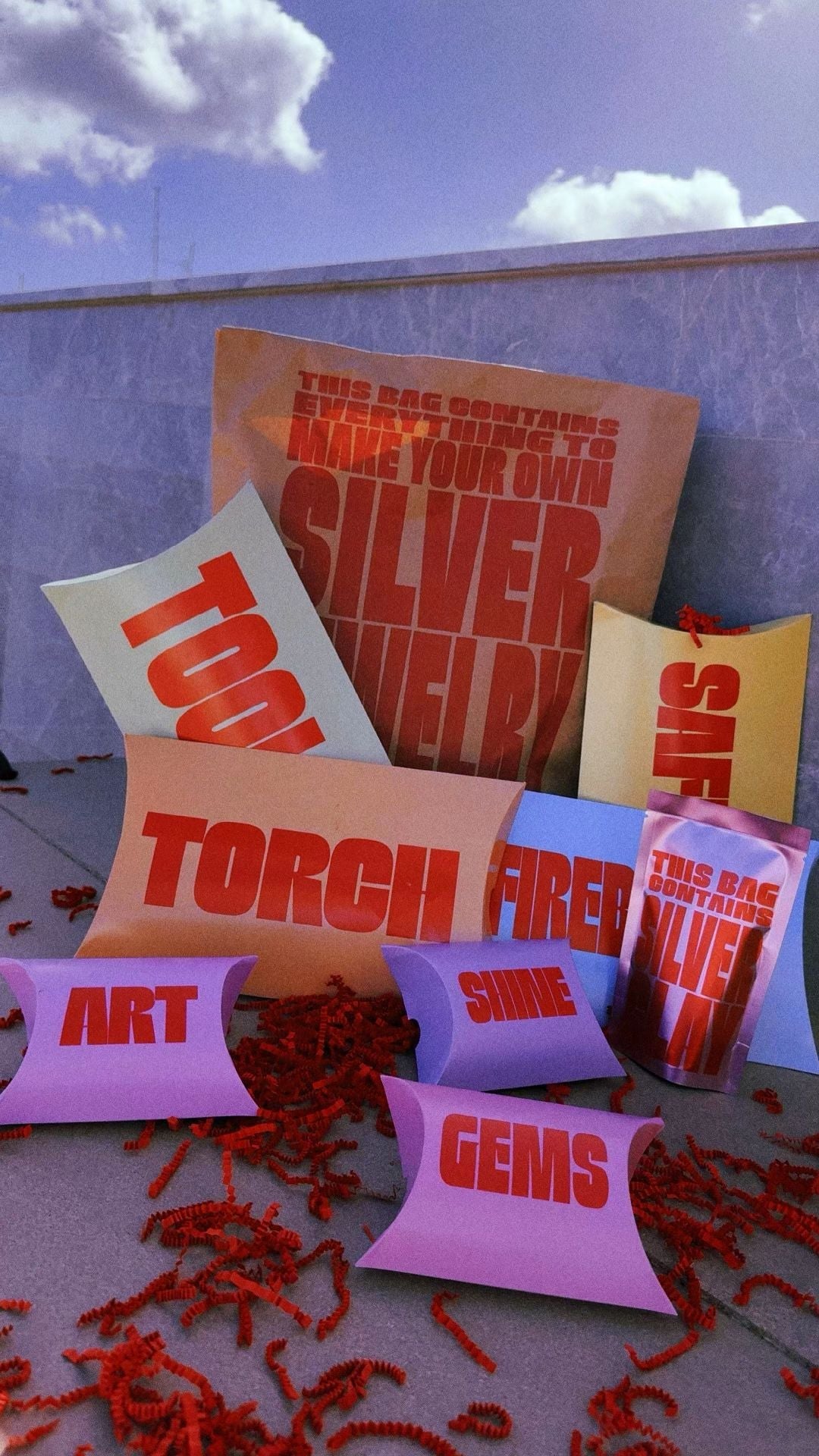
If you are setting up for the first time, the silver clay starter kit includes the clay, a torch, the working tools, cubic zirconia stones that fire in place, and instructions, so you can texture and fire your first pieces the same afternoon. Once you have your tools, silver clay on its own keeps you going, and everything ships worldwide with duties covered.
Texture sheets for metal clay are a small purchase that changes what you can make. But the leaf in your garden works just as well, and it costs nothing at all.