
If you have been wondering where to buy silver for jewelry making, the honest answer is that it depends on what you want to make. Silver comes in more forms than most beginners expect, and the best source for wire is not always the best source for a mouldable silver you can shape by hand. This guide walks through the main options, what each one is good for, and how to avoid the common traps.
The main forms of silver for jewellery making
Most silver sold to makers falls into one of four categories. Sterling silver wire and sheet are the classic choice for soldering, wire wrapping and fabrication. Silver findings are the ready-made bits: clasps, jump rings, ear wires, chain and bails. Silver beads and charms are for stringing and assembly. And silver clay is fine silver in a mouldable form that you shape, dry and fire yourself.
The right form depends on your skills and tools. Wire and sheet need a saw, files, a soldering setup and a fair amount of practice. Findings and beads need pliers and patience. Silver clay needs a small torch, a few simple tools and a table to work at. If you want to make solid silver pieces without a full bench, it is usually the most accessible route.
Where to buy silver for jewelry making: the usual sources
Bullion and metal dealers sell sterling and fine silver wire and sheet by weight. Prices track the silver market, so they change daily, and you will usually pay a small premium over the raw metal price for fabrication. This is the best route if you already solder and want plain stock.
Jewellery supply shops carry findings, chain, beads and often wire in smaller quantities. Look for the 925 stamp on sterling items and check whether a "silver" bead is actually silver plated, which is a common source of disappointment. Our post on what 925 means on jewellery explains the marks.
Marketplaces are convenient but need care. Listings that say "silver tone" or "silver colour" are not silver at all. Where possible, buy from a seller who states the alloy, the weight and the country it ships from, and who will answer questions before you order.
Specialist silver clay shops sell clay, paste and syringe forms, along with the tools that go with them. Silver clay is a niche product, so it is rarely stocked by general craft stores, and buying directly from a maker or specialist tends to get you fresher clay and clearer instructions.
What to check before you order
Whatever you buy, three things are worth confirming. First, the purity: sterling is 92.5% silver, while fine silver is 99.9%. Second, whether the price includes shipping and import duties, since silver is often shipped internationally and a surprise customs bill can double a small order. Third, how it is packaged. Wire should arrive coiled and clean, and silver clay should be sealed so it does not dry out before it reaches you.
If you order from TheLilaLobster, shipping is worldwide and duties are covered, so the price you see is the price you pay.
Why silver clay is worth considering
Silver clay is a mix of tiny fine silver particles, an organic binder and water. You shape it like modelling clay, let it dry, then fire it with a small torch. The binder burns away and the silver particles fuse into solid metal. After firing, the piece is 99.9% fine silver, which is purer than sterling. Expect it to shrink by roughly 8 to 10% during firing, so make pieces slightly larger than the finished size you want.
The appeal is that you skip most of the traditional bench work. There is no sawing, no soldering and no pickling. Textures, fingerprints, stamped letters and set stones can all be built in while the clay is soft. If you want to see how the process works from start to finish, read how to use silver clay or the complete guide to silver clay.
Starting with a kit versus buying separately
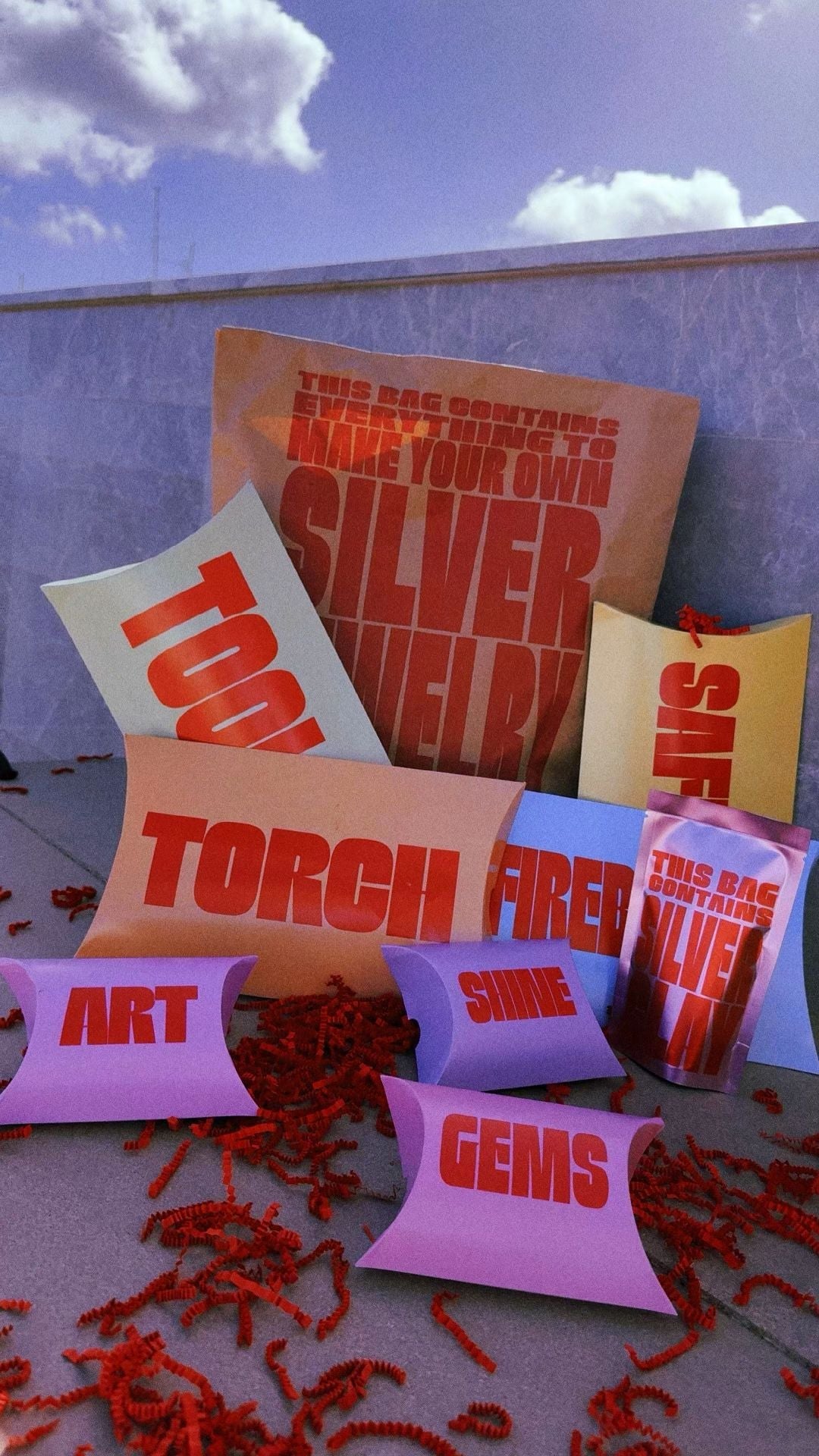
If silver clay is new to you, a kit removes the guesswork. The silver clay starter kit contains the clay, a torch, the tools you need, cubic zirconia stones that can be fired in place, and step-by-step instructions. Once you know what you use most, you can buy silver clay on its own for your next projects.
Buying separately makes more sense if you already own a torch and basic tools. Many makers combine both: a clay pendant hung on a bought sterling chain, or a fired silver charm attached with a purchased jump ring.
A simple way to decide
Ask yourself what you want to hold in your hand at the end. If it is a wire-wrapped stone or a strung bracelet, buy wire, findings and beads from a reputable jewellery supplier. If it is a solid silver ring, pendant or charm that you designed yourself, silver clay is the most direct route. Either way, check the purity, check the total landed cost, and buy from someone who tells you exactly what you are getting.