

Graduation gifts are difficult in a specific way. The moment is enormous, the budget usually is not, and most of what gets given disappears within a year. Personalized graduation jewelry is one of the few options that survives the move, the first job and the flat share.
What to put on personalized graduation jewelry
The temptation is to fit in everything: name, degree, institution, date, motto. Resist it. Small pieces read better with one thing on them, and one well-chosen detail ages far better than a crowded surface.
- The date. Just the year, or the full date if the piece is large enough.
- Initials. Theirs, in a plain typeface, kept small.
- Coordinates. The campus, the town, the building they spent four years in.
- A short word they would actually claim. Not a quotation.
- A texture. A pressed leaf from the grounds makes a piece that is personal with no lettering at all.
Pieces that get worn after the ceremony
A plain band with the date inside is the safest choice, because nothing about it announces itself and it works with everything. A small pendant on a short chain is the next best. Stud earrings are good if you know their taste well enough. Cufflinks or a signet-style ring suit someone moving into work that involves a shirt.
The pieces that tend not to get worn are the ones shaped like the occasion: scrolls, caps, mortarboards. They are lovely on the day and put away by the autumn.
Why make it rather than buy it
Silver clay is fine silver particles suspended in an organic binder. You shape it like modelling clay, let it dry hard, then fire it. The binder burns off and what remains is 99.9% fine silver. It shrinks by around 8-10% as it fires, so a ring should be built slightly larger than the finished size you want. It fires with a handheld torch on a heatproof surface, which means no kiln and no workshop.
That combination is what makes a graduation piece realistic to make at home. You are not learning to solder or cast. You are rolling, stamping, drying and firing, and the whole thing fits into an afternoon.
How to make one
Roll the clay evenly. Cut the shape, whether that is a band, a disc or a small tag. Stamp the date or initials while the clay is still soft, pressing firmly and straight down so the letters sit at an even depth. Add a hanging hole now if the piece needs one, because drilling it later is far more work. Let the piece dry completely. Tidy the edges with a file or fine sandpaper. Then fire it, quench it, and brush and burnish it to a finish.
If this is your first piece, start with how to use silver clay, and if you would rather practise before committing, how to make a silver clay ring is the natural first project.
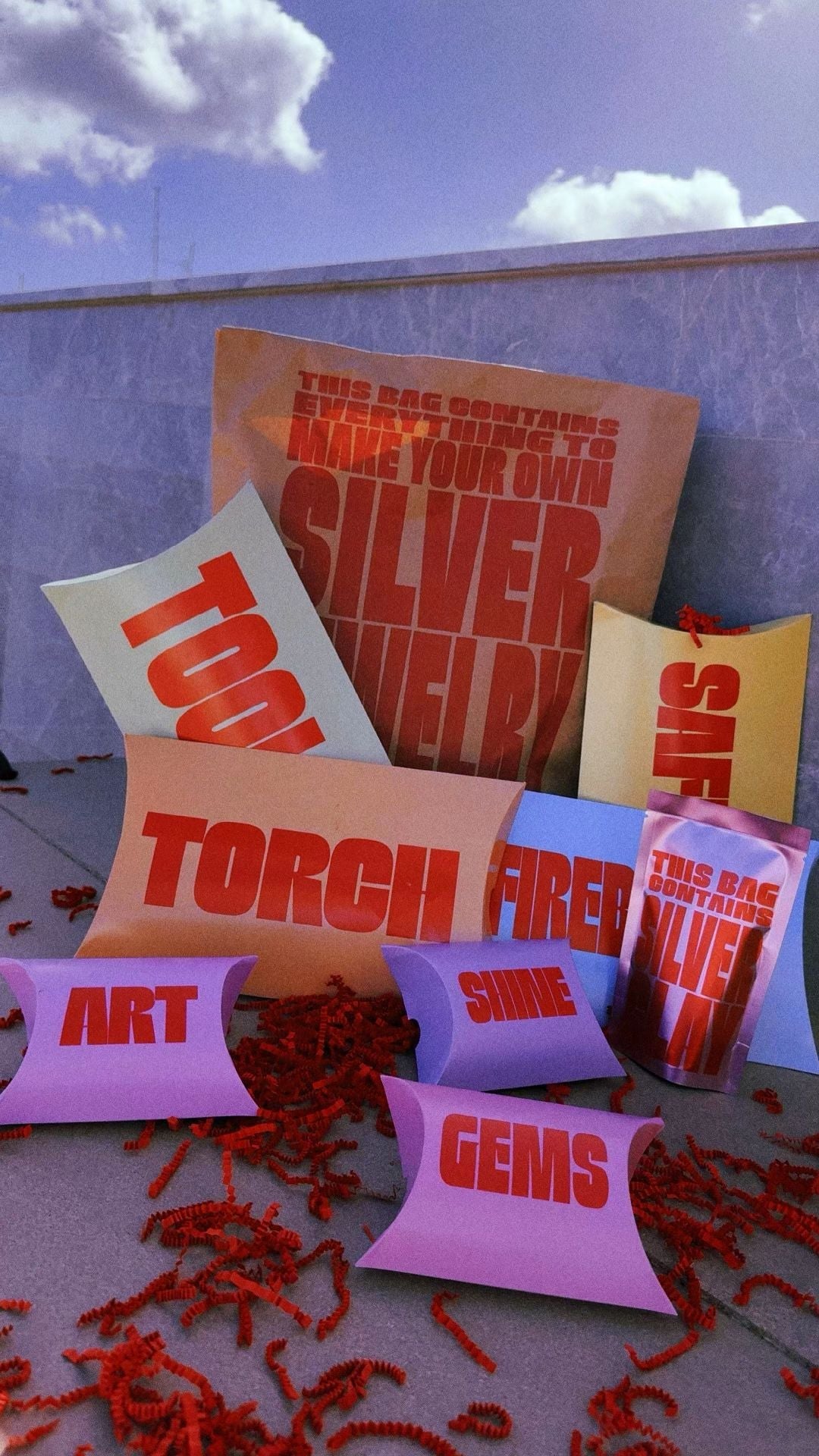
The silver clay starter kit has the clay, torch, tools, a cubic zirconia and instructions in one box, and we ship worldwide with import duties covered.
Practical notes
Give yourself more time than you think you need. Drying is the stage people rush, and firing clay that is still damp is the most common way a piece fails. If the gift has to be ready for a fixed date, make it a week early and treat any spare time as a buffer rather than a bonus.
Fine silver is soft, so keep bands a little thicker than looks necessary. It also tarnishes more slowly than sterling, which suits a piece someone will wear daily and never think to polish.
A graduation is one of the few occasions where the recipient genuinely remembers who gave them what. Something made by hand, with the right date on it, is a good way to be on that list.