

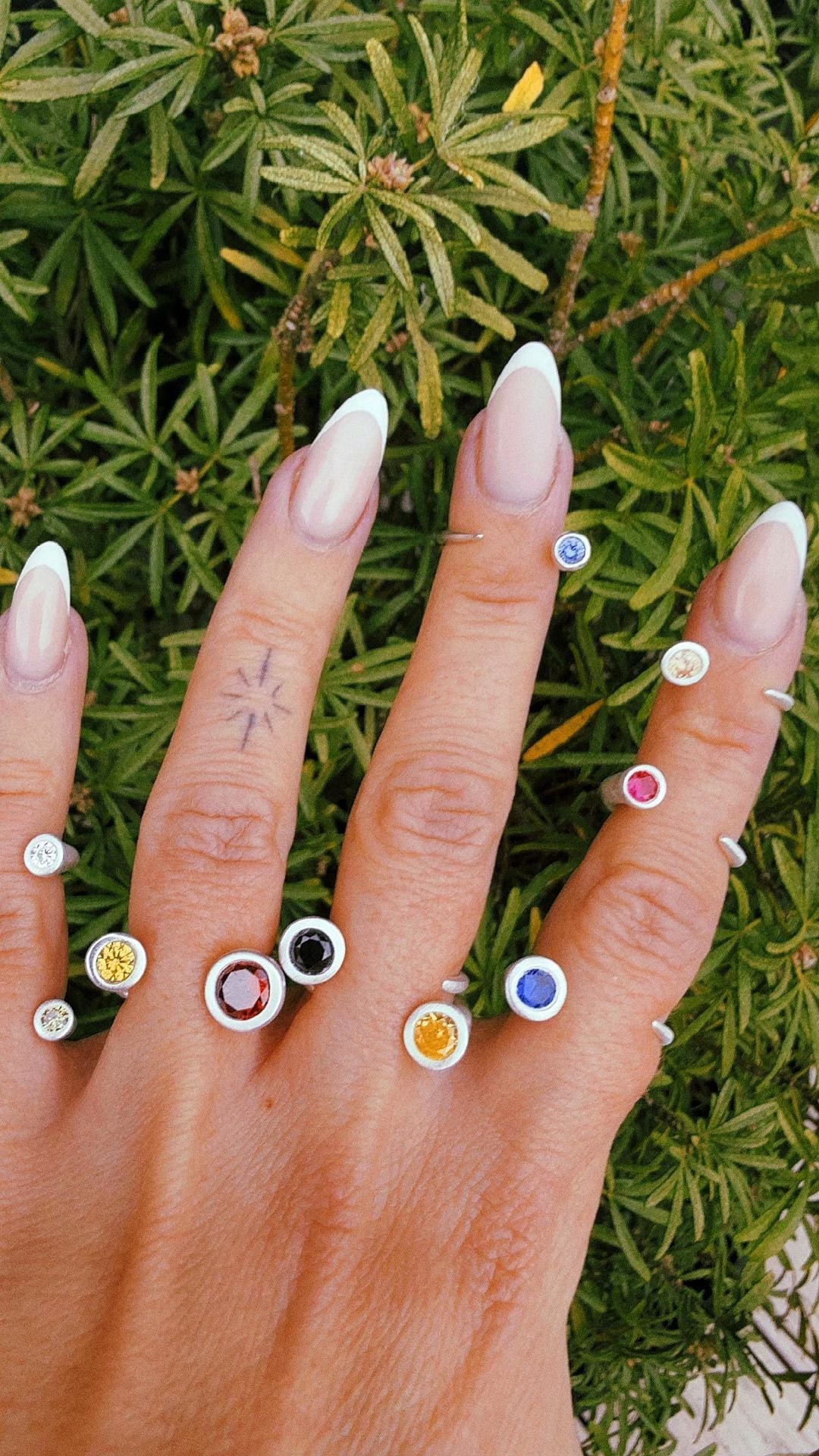
Most of us have a drawer like it: tangled chains, single earrings, a ring that no longer fits, a pendant from someone who mattered. Deciding what to do with old jewelry is harder than it looks, because the pieces are rarely worth much in money and often worth a great deal in memory. Here are seven honest options, from the practical to the creative.
First, sort before you decide
Empty the drawer onto a tray and make three piles: things you would wear if they were fixed, things you keep only for sentimental reasons, and things you genuinely do not want. Most people find the third pile is smaller than expected. That sort alone answers half the question, because each pile has a different answer.
1. Repair the near-misses
A snapped chain, a bent ear wire or a missing clasp is usually a ten-minute fix, not a lost cause. Replacement findings cost very little and a surprising number of pieces come back into rotation this way.
2. Resize rather than replace
Rings that no longer fit are the most common casualty. A jeweller can size most plain bands up or down a little, and knowing your current size first saves a wasted trip.
3. Harvest the stones
Old costume and fine jewelry alike often hold perfectly good stones in tired settings. Prising a stone out of a broken piece and giving it a new home is one of the more satisfying things you can do with a drawer full of odds and ends.
4. Take an impression of it
If a piece is too fragile or too small to wear, you can still keep its shape. A silicone mould taken from a textured button, a worn signet face or an engraved surface captures the detail exactly, and that mould can then be pressed into silver clay to make a new piece that carries the old pattern.
5. Remake it in silver clay
This is where old jewelry becomes new jewelry rather than scrap. Silver clay is fine silver particles held in an organic binder: you shape it like modelling clay, let it dry, then fire it with a handheld torch. The binder burns away and what is left is 99.9% fine silver, shrinking roughly 8-10% as it does so. That means you can set a rescued stone into a band you shaped yourself, or rebuild a lost charm from the mould you took in step four. Our complete guide to silver clay walks through the whole process, and how to make a silver clay ring is the easiest first project if the piece you want to replace is a band.
6. Pass it on deliberately
Some pieces are not for you at all. Giving a grandmother's brooch to the grandchild who actually admired it, while you are still around to tell the story behind it, is worth more than storing it for another decade.
7. Sell or recycle the rest honestly
What is genuinely unwanted can go to a scrap buyer or a charity shop. Weigh expectations carefully: silver pays by weight and purity, so a light plated chain is worth almost nothing, while solid sterling adds up. Recycling is still better than a landfill drawer.
Where to start if you want to remake something
You do not need a workshop or a kiln. A silver clay starter kit contains the clay, a torch, the basic tools, a cubic zirconia and step-by-step instructions, which is everything required to turn one drawer piece into something wearable at a kitchen table. If you would rather read before you buy, start with how to use silver clay. We ship worldwide with duties covered, so the price you see is the price you pay.
Old jewelry rarely deserves the drawer. Sorted, repaired or remade, most of it has one more life in it.