
Booking your first table is the easy part. Working out what to actually put on it is where most people stall, so this is a practical set of craft fair ideas covering what to make, how to price it and what to bring on the day. It assumes you are selling something handmade and small, which is where the margins usually are.
Make a range, not a collection
The single most common mistake is bringing forty variations of one thing. A table sells better with three price tiers: an impulse buy at pocket-money level, a mid-range piece that most visitors can justify, and one or two showpieces that make people stop walking. The showpieces rarely sell. They earn their place by pulling people in so they buy the mid-range item.
Craft fair ideas that suit a small table
Handmade silver jewelry works well at fairs because it is small, light and high-value per square centimetre of table. Pendants, charms, stacking rings and earrings all travel in one box. If you make with silver clay, you have a further advantage: the pieces are 99.9% fine silver after firing, which is a genuine material claim you can make to a sceptical buyer rather than a vague "silver-tone". Other formats that consistently work at fairs are candles, ceramics, printed cards, and anything personalised on the spot.
Bring something you can personalise there and then
Stamping an initial, a date or a name while someone waits turns a browser into a buyer, and it lets you charge more without more stock. Keep it to a small set of letters and a single font so it stays quick.
Price for the room, not for your ego
Add up materials, then your time at an hourly rate you would accept, then double it if you ever plan to sell wholesale. Round to clean numbers so you are not fumbling for coins. Bring a card reader and a float, and put prices on everything: a table without visible prices loses the shoppers who are too shy to ask, and that is most of them.
Your stall kit
Beyond the stock itself, the things people forget are a tablecloth that reaches the floor so you can hide boxes underneath, something to add height (a couple of wooden crates will do), a mirror if you sell anything worn, bags or boxes for purchases, a notebook, spare batteries and a bottle of water. Business cards with a QR code to your shop turn the people who did not buy into people who might.
Talk less than you think
Stand rather than sit, greet people once, and then let them look. The strongest opening line is a short honest fact about how the thing was made. "I fire these myself with a torch, they come out as pure silver" does more work than any sales patter.
Getting started if you do not have stock yet
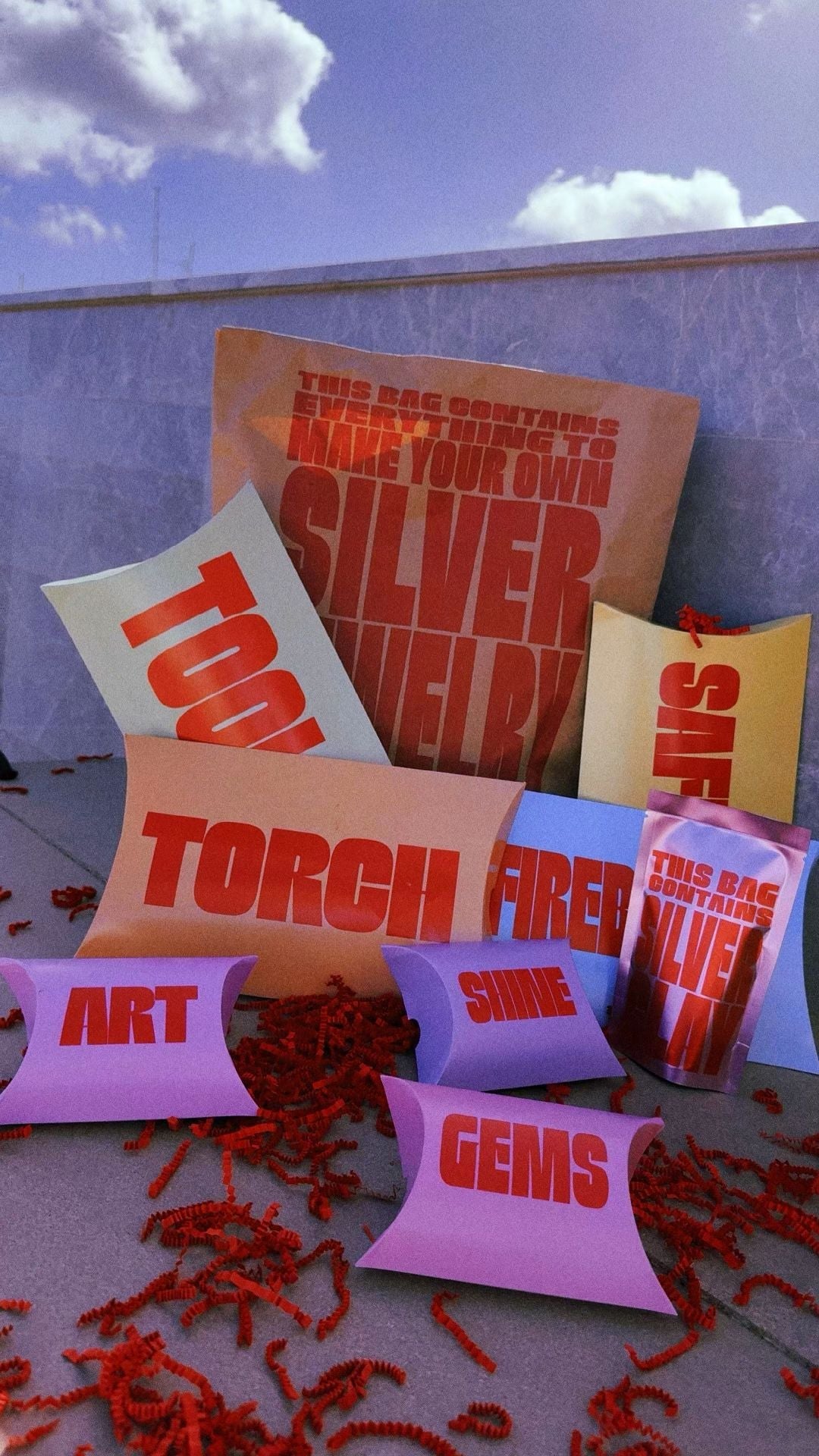
If you are choosing a craft to sell rather than already making one, silver jewelry has a low entry cost relative to what it sells for, and no kiln is required. A silver clay starter kit includes the clay, a torch, the tools, a cubic zirconia and instructions, which is enough to make your first saleable pieces at home. Our complete guide to silver clay explains the material properly, and how to use silver clay covers the working steps, including the 8-10% shrinkage to allow for when you are sizing rings for a stall. We ship worldwide with duties covered.
After the fair
Write down what sold, at what price, and what people picked up but put back. Two fairs of that data will tell you more about your range than a year of guessing. And follow up: the email address someone gave you at a stall is worth far more than the single sale.