

Knowing how to refill a butane torch is one of those small skills that quietly removes a lot of frustration. A torch that sputters halfway through firing a pendant is almost always a fuel problem rather than a fault, and a refill takes under a minute once you have done it once. This guide covers which fuel to buy, the step-by-step refill, and what to do when a freshly filled torch refuses to light.
Which butane should you buy?
Use refined butane sold for lighters and culinary torches. Cheaper fuel carries more impurities, and those impurities clog the tiny jet inside the torch, which is the most common reason a torch starts producing a weak or yellow flame. Cans that advertise multiple filtrations are worth the extra couple of pounds or euros.
Check the nozzle adapters too. Most cans come with a small set of plastic tips, and one of them will match the fill valve on your torch. If none fits snugly, the fuel will hiss out around the seal instead of going in.
How to refill a butane torch, step by step
- Turn the torch off and let it cool. Never refill a torch that is still warm from firing.
- Turn the flame adjuster to its lowest setting. This reduces the chance of an over-rich flame on the first light.
- Purge the old air. Find the fill valve underneath the torch and press it briefly with a small screwdriver or the tip of a pen. You will hear a short hiss. Air trapped in the tank is what stops a torch lighting after a refill, so this step matters more than people expect.
- Hold the torch upside down. The can goes upright underneath it, nozzle up, so liquid butane flows downwards into the tank rather than gas.
- Press firmly for five to ten seconds. Keep the can and the valve in a straight line. When fuel starts spitting back out around the valve, the tank is full.
- Wait two or three minutes before lighting. The butane is cold from expanding and needs to settle. Lighting immediately gives you a flame that gutters and dies.
When a filled torch still will not light
Nine times out of ten the tank is still holding air. Purge it again, properly this time, until nothing more escapes, then refill. If that does not fix it, the fuel setting may simply be too low to sustain a flame, so open the adjuster slightly and try again.
A yellow, lazy flame instead of a sharp blue one usually points to a partially blocked jet from low-grade fuel. Running the torch until it is completely empty and refilling with a cleaner butane often clears it. And if the ignition clicks without sparking, the piezo igniter may just be dirty rather than broken.
Safety basics worth repeating
Refill in a ventilated room, away from any flame, and never near the space where you have just been firing. Butane is heavier than air, so it pools at low level; do not refill over a sink or into a drawer. Store both the torch and the can somewhere cool, out of direct sunlight, and well away from children.
When you are firing, work on a heatproof surface such as a soldering block, keep a bowl of water within reach, and give the piece time to cool before you handle it.
How much fuel does silver clay firing actually use?
Less than most people assume. A small piece is held at a peach-orange glow for a couple of minutes, so a full tank covers many pieces. The practical habit is to top up before a session rather than during one, because a torch running low delivers a cooler flame and a cooler flame gives you an under-sintered piece.
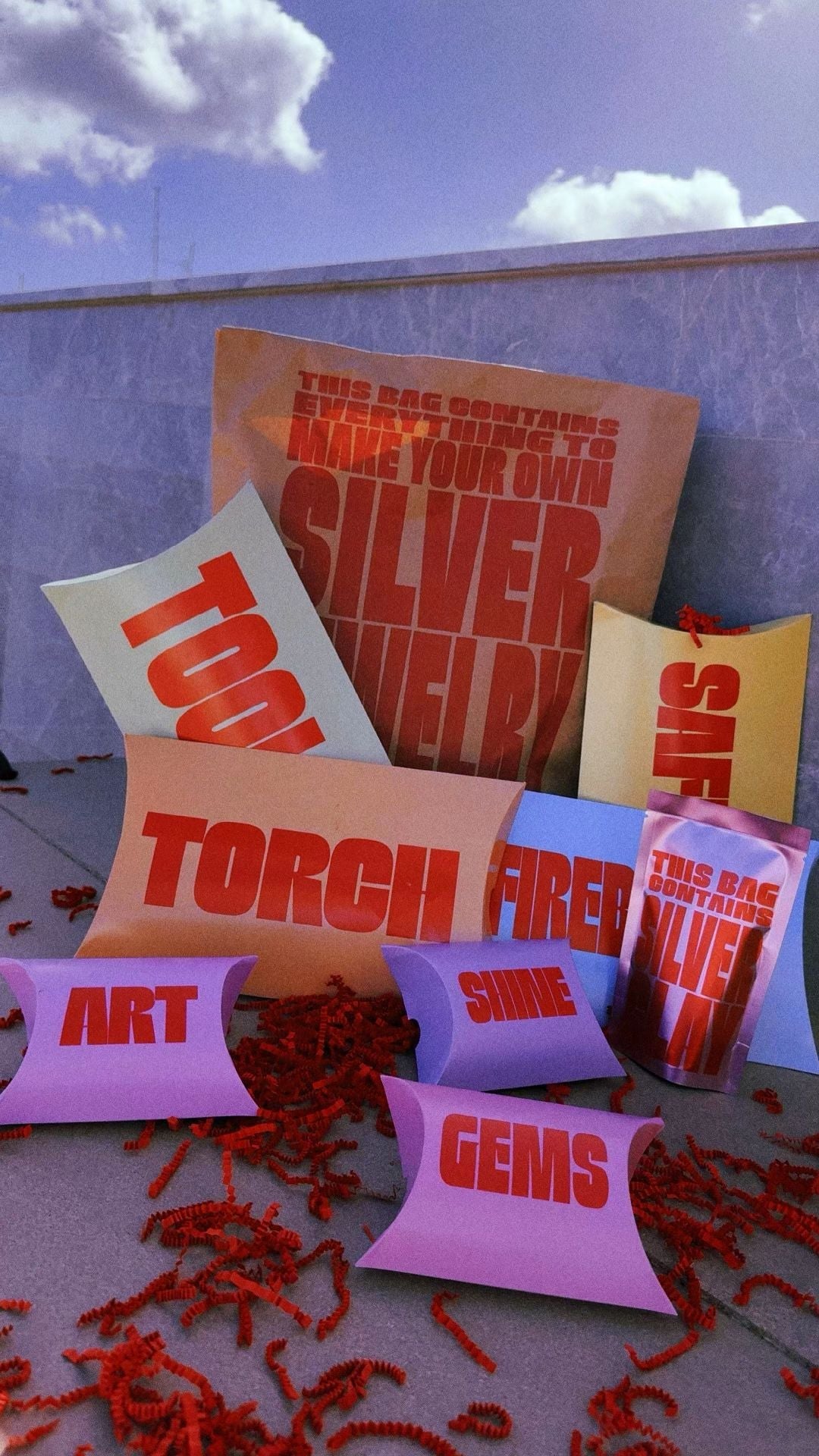
Our clay is torch-firable and comes out of the flame as 99.9% fine silver, shrinking roughly 8 to 10% along the way. If you are new to the process, how to use silver clay walks through shaping, drying and firing, and the complete guide to silver clay fills in everything around it. The silver clay starter kit includes clay, a torch, tools, cubic zirconia and instructions, so the only thing you need to buy separately is the butane itself.