

A permanent bracelet is a chain fitted to your wrist and closed with a small weld instead of a clasp. There is no catch to undo, so it stays on through showers, sleep and swimming until someone cuts it off. It has become a fixture in jewellery shops and pop-ups over the last few years, usually sold as a shared moment between friends, sisters or partners rather than as a product.
How a permanent bracelet is actually fitted
The chain is measured against your wrist, cut to length, and the two open ends are joined with a jump ring. That ring is then closed with a very brief pulse from a small welder, which fuses the metal without solder and without noticeable heat on the skin. A protective card is usually held between the join and your wrist. The whole thing takes a few minutes.
Nothing about the weld is mysterious, but it does mean the join is only as good as the metal. Thin, hollow or plated chain welds poorly and wears through; solid gold or solid sterling holds up. Ask what the chain is made from before anything is cut.
What to think about before you commit
Removal is the part people underestimate. Taking it off means cutting the chain, and refitting means another weld and a slightly shorter bracelet each time. Airport security is generally fine, but medical scans are not: an MRI department will ask you to remove all metal, and hospital staff will cut it without ceremony. Anyone who has regular scans should think twice.
Fit matters too. Wrists change size in heat, in pregnancy, and with weight. A permanent bracelet fitted snugly in winter can be uncomfortably tight in August, so most fitters leave a little slack on purpose. Ask for enough that you can slide a finger underneath.
Skin is the last consideration. A chain that never comes off traps soap, sunscreen and sweat against the same patch of skin. Solid sterling silver and solid gold are usually fine; plated and nickel-containing alloys are the ones that cause trouble. Rinse and dry your wrist properly if you have sensitive skin.
A handmade alternative you can take off
The appeal of a permanent bracelet is not really the welding. It is that two people made something together and both walked away wearing it. That is achievable without giving up the clasp.
Silver clay is worked like modelling clay and fired with a small torch on a heatproof surface. What comes out is 99.9 per cent fine silver, shrunk by 8 to 10 per cent as the binder burns away and the metal particles fuse. Two people can each make a small charm or a linked panel in an afternoon, fire them side by side, and end up with a matched pair that is genuinely handmade rather than assembled.
Because you are making the piece rather than being fitted for one, sizing is forgiving and nothing needs cutting off later. Our complete guide to silver clay walks through what the material is and how it behaves before you start.
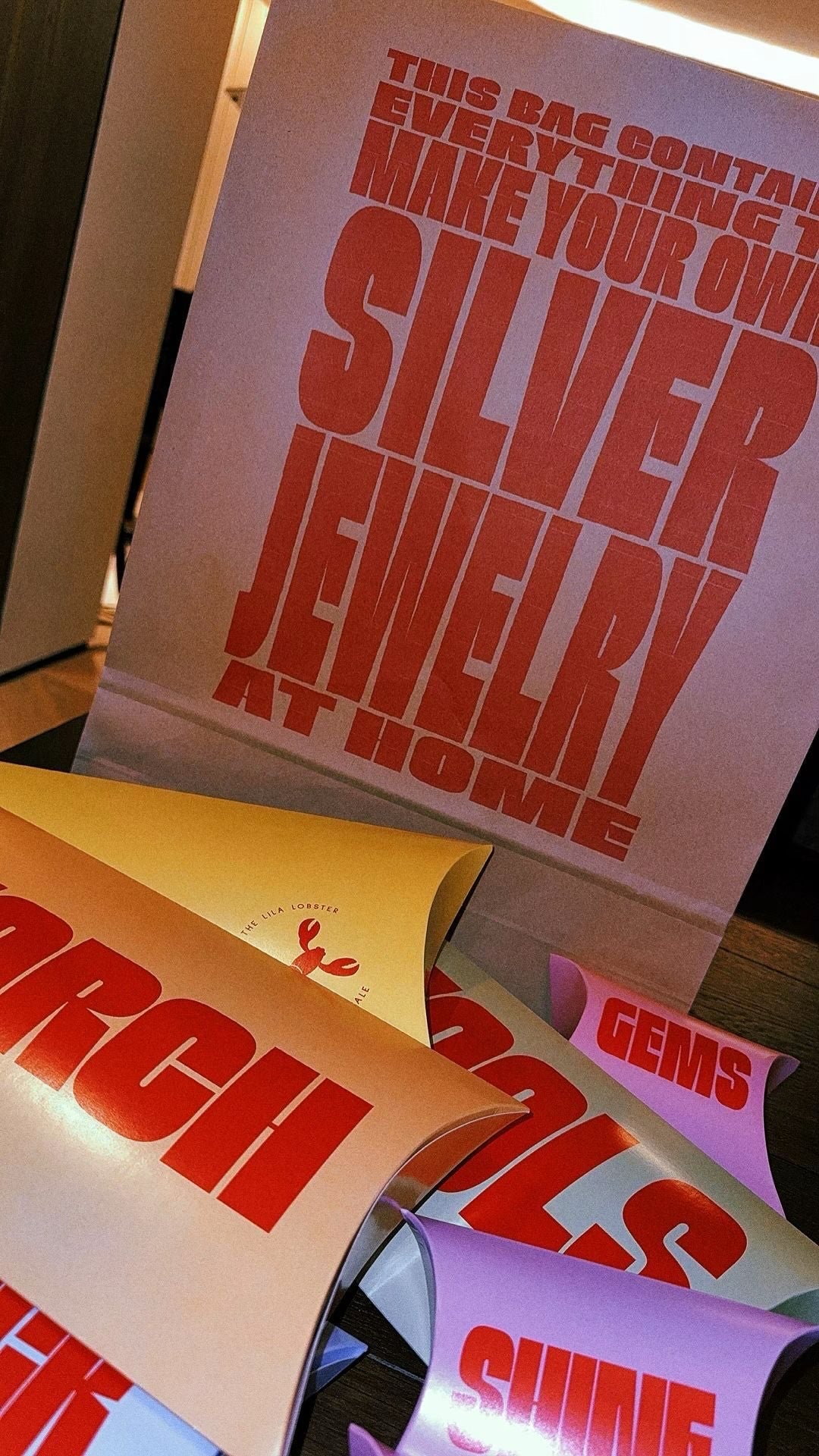
If you want everything in one box, the silver clay starter kit includes the clay, a torch, tools, a cubic zirconia and instructions. We ship worldwide and cover the duties, so the price you see is the price you pay.
Which one suits you
If you want a piece you never think about again and are happy for a jeweller to fit it, a permanent bracelet in solid metal is a reasonable choice. If you would rather have the making be the memory, and keep the option of taking the thing off, make one instead. Both end up on the wrist.