

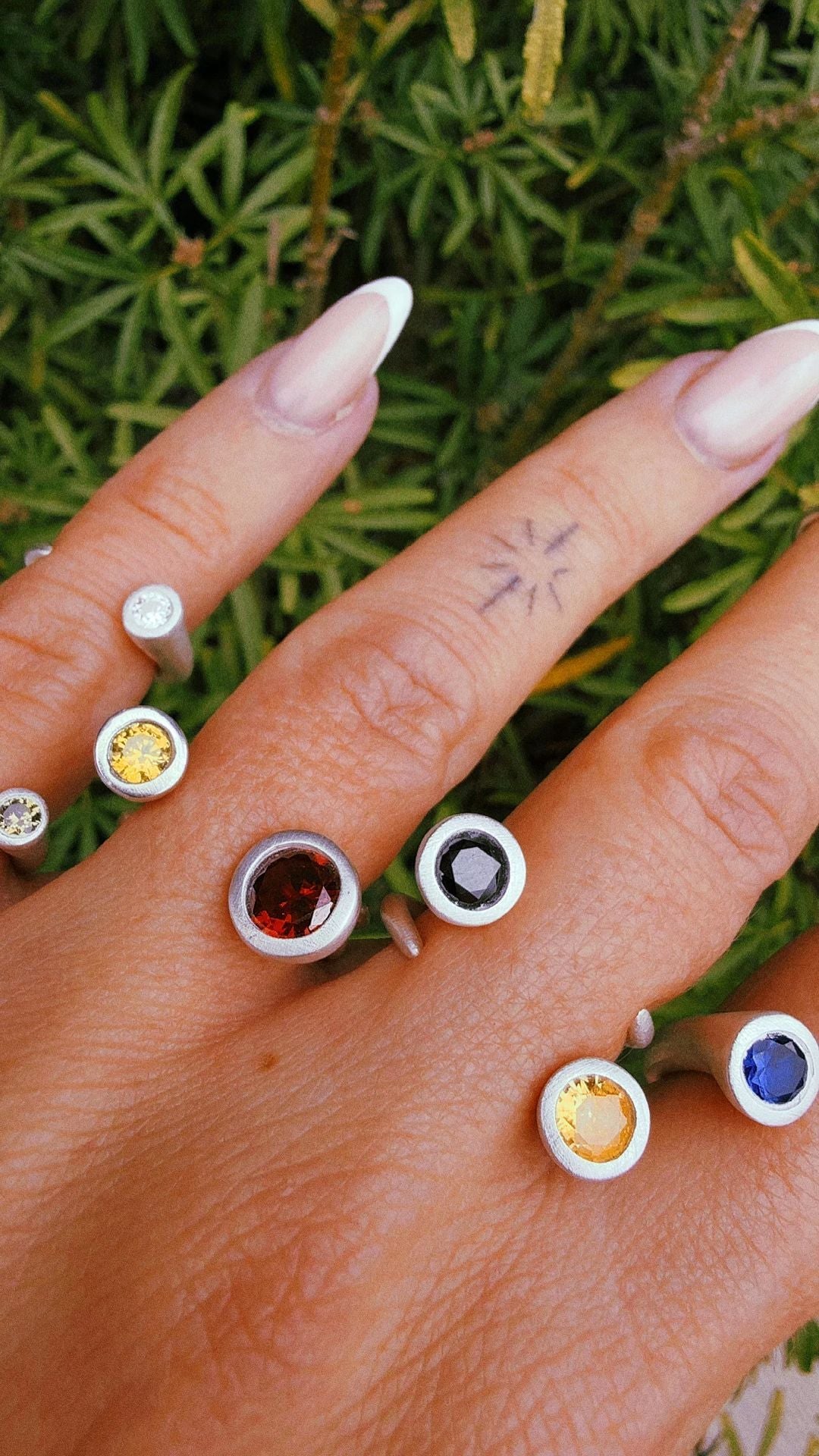
Does fine silver tarnish? The short answer: yes, but much more slowly than sterling silver, and for a different reason. If you make jewellery from silver clay, which fires to 99.9% fine silver, this matters. It changes how your pieces age, how often they need cleaning and what you can safely use on them.
Why sterling silver tarnishes faster
Sterling silver is 92.5% silver and 7.5% other metals, usually copper. Copper is added to make the alloy harder, but it is also the part that reacts most readily with the air. Sulphur compounds in the atmosphere, in some foods and in sweat react with the copper and the silver to form a dark layer of silver sulphide on the surface. That grey-black film is tarnish.
Fine silver contains almost no copper. Pure silver still reacts with sulphur, so it is not immune, but without the copper doing much of the work the process is far slower. A fine silver ring worn daily tends to stay bright for a long time, and when it does dull it is usually a soft, even warming of the colour rather than blotchy black patches.
Does fine silver tarnish differently?
In practice, yes. Three things stand out with fired silver clay pieces.
First, the surface finish matters. A highly polished fine silver piece shows tarnish later than a matte, brushed one, simply because a smooth surface has less area exposed to the air. Second, where you live matters. Humid coastal air, city pollution and homes with gas heating all speed things up. Third, what touches the piece matters: hot springs, chlorinated pools, rubber bands, wool and some cosmetics contain sulphur and will darken silver quickly, fine or sterling.
What fine silver does not do is develop the greenish copper-related discolouration that some people notice with sterling or with plated jewellery, and it is far less likely to leave marks on the skin.
How to keep fine silver bright
Wear it. This sounds odd, but jewellery that is worn regularly is gently rubbed by skin and clothing, which slows tarnish. Pieces that sit in a drawer for a year often come out darker than the ones worn every day.
Store it well. Keep pieces in a closed box or a small zip bag, away from rubber, wool and paper with high sulphur content. Anti-tarnish strips in the box help.
Clean it gently. Warm water, a drop of mild washing-up liquid and a soft cloth handle most everyday dullness. A polishing cloth restores shine. Avoid abrasive pastes and toothpaste, which scratch the surface, and avoid dipping solutions on any piece with set stones or an intentional dark patina, because they strip everything at once.
Take it off for the pool, the hot tub and cleaning jobs. Chlorine and household chemicals are harder on silver than ordinary daily wear.
A note on patina
Many makers darken silver clay pieces on purpose, using a patina solution to fill textures and recesses with a black or blue-grey tone, then polishing the high points back to bright silver. That is controlled tarnish. Fine silver takes a patina beautifully, and because the surrounding metal tarnishes so slowly, the contrast lasts. If you have done this, clean with a cloth only, and keep the piece away from dips that would remove the patina.
What this means for silver clay makers
Fine silver is soft compared to sterling, which is why it suits pendants, earrings and everyday rings rather than heavy, high-stress settings. In return you get a metal that stays bright with little effort and that tolerates a lot of neglect. Pieces from our silver clay starter kit come out of the torch as fine silver, and everything above applies to them. For the full process from packet to finished piece, see our guide to using silver clay and the complete silver clay guide. Extra silver clay is available on its own, and we ship worldwide with duties covered.