

Silver clay looks like ordinary modeling clay — soft, gray, easy to shape with your hands. But fire it with a simple torch, and it becomes real 99.9% fine silver. Purer than sterling. Real precious metal, made at your kitchen table. This guide answers every question we get about silver clay, with videos so you can see it happen.
What is silver clay?
Silver clay (also called metal clay or precious metal clay) is made of three things: microscopic particles of pure silver, water, and a natural binder. The binder holds the silver particles together so you can roll, shape, carve and stamp the material exactly like clay.
When you fire the dried clay, the binder burns away completely and the silver particles fuse together. What's left is solid 999 fine silver — the same purity as silver bullion, purer than the sterling silver (925) used in most commercial jewelry.
How does silver clay work?
The process has four steps, and none of them need a goldsmith's workshop:
1. Shape it. Roll it flat, form a ring band, press in textures from leaves or fabric, stamp letters, or sculpt freely. You have 15–30 minutes of working time before it starts drying.
2. Dry it. Let your piece air-dry (or speed it up with a hairdryer). Dried clay can still be carved, drilled and sanded — this is where you refine the details.
3. Fire it. A handheld butane torch is enough. During 2–3 minutes of firing, the binder burns off and the silver particles sinter — fuse — into solid metal. No kiln required (though a kiln works too).
4. Polish it. Straight from firing, silver is matte white. Brushing and polishing brings out the mirror shine of real silver.
Is silver clay real silver?
Yes. After firing, your piece is 99.9% pure silver — you can have it assayed like any precious metal. It's not silver-plated, not silver-colored, not an imitation. People are often skeptical because the process feels too easy; that's exactly why we stamp and test our own pieces.
Fine silver vs sterling silver
Fired silver clay is fine silver (999): 99.9% pure. Sterling silver (925) is 92.5% silver alloyed with copper for extra hardness. Fine silver is slightly softer but doesn't tarnish as quickly and has a warmer, whiter color. For rings worn daily, we recommend slightly thicker designs — the kit instructions cover this.
What can you make with silver clay?
Rings, charms, pendants, earrings, personalized gifts with fingerprints or handwriting — and you can press cubic zirconia stones directly into the clay before firing. Browse our handmade silver clay jewelry to see what's possible, or learn to fire silver clay with a kitchen torch.
How do I start?
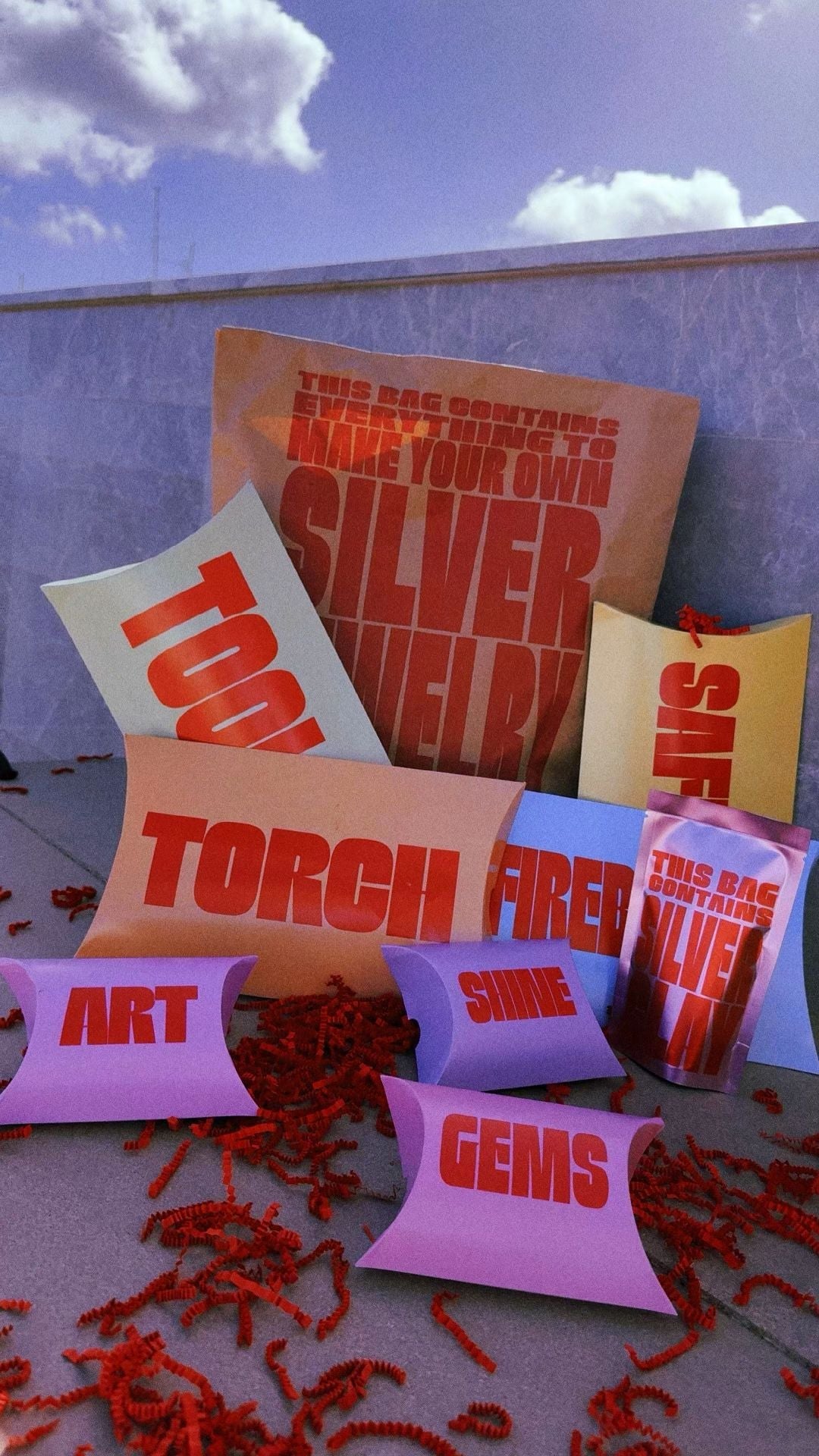
You need silver clay, a torch, basic shaping tools and safety items. The Silver Clay Starter Kit contains all of it — 7g of our own 99.9% silver clay, torch, tools, cubic zirconia stones and step-by-step instructions. Or get the clay separately: TheLilaLobster silver clay.
Questions we didn't answer here? Ask us on Instagram — we make videos about this every week.